By Matt Law
The Arc of Progress: Up Sometimes
Why we're living in the most interesting time in 300 years.
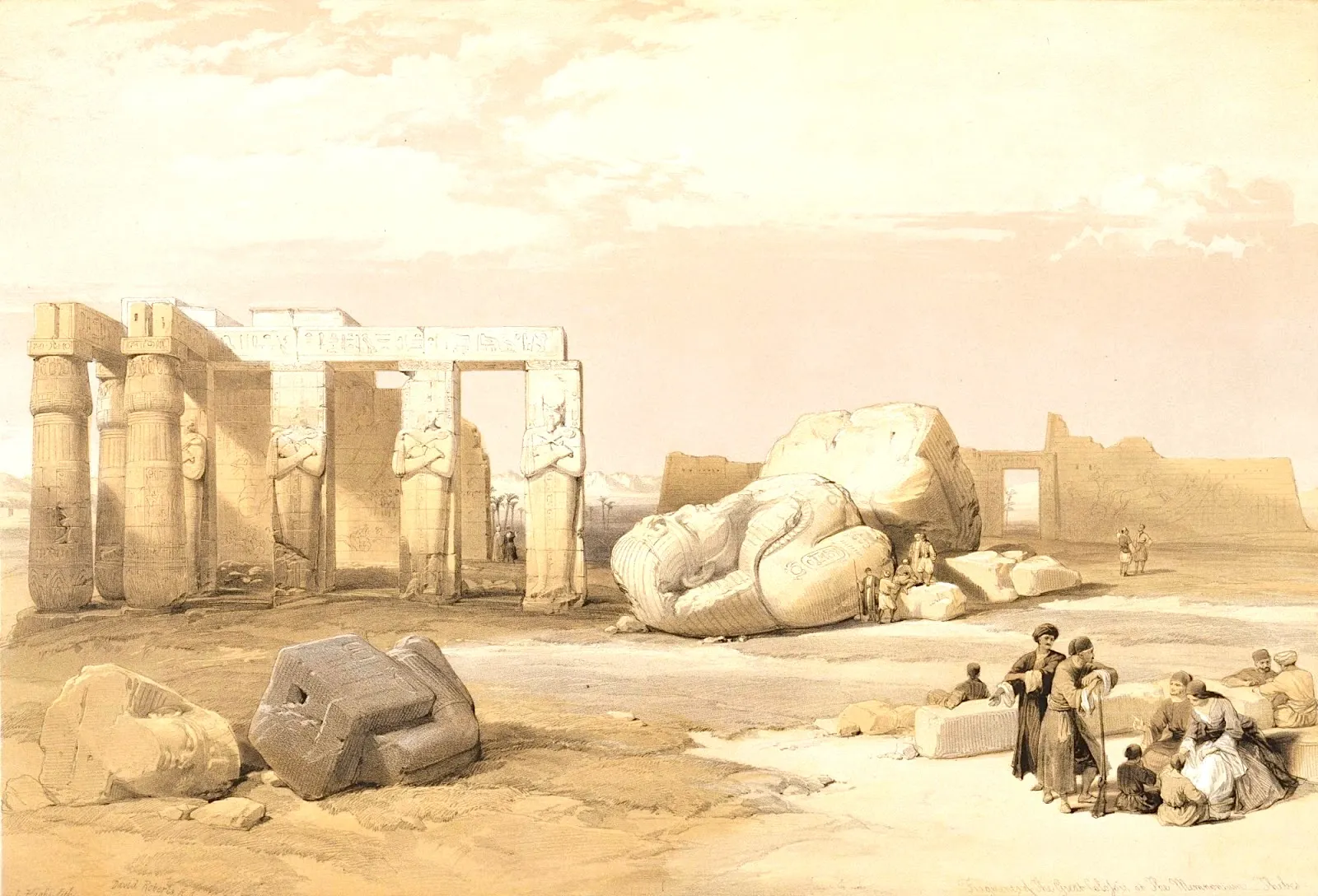
Medieval scholars saw only decline in crumbling Roman ruins. Today’s techno-pessimists see stagnation in productivity data. Both are missing the same thing: the quiet assembly of transformational infrastructure during transition periods.
So in my last article I wrote of the fallacy of “up only” in technological progress
You can see that article here: We do not live in exponential times
Maybe this is pessimistic, even defeatist, and there is a belief getting some traction that “time is a flat circle” - that we are trapped in a cycle of endless repeating history - I would argue that this is the result of the cognitive dissonance of 25 years of “exponential times” chat along with the reality of 25 years of relative stasis in terms of real progress.

But that raises the question: what actually triggers the next wave of genuine progress?
Understanding S-curves means recognising we’re in the natural transition period that precedes genuine transformation. History shows these plateaus are when the infrastructure for the next wave gets quietly assembled. The printing press was invented in 1440 but didn’t reshape society until the 1600s. Steam engines existed in the early 1700s but didn’t trigger the Industrial Revolution until the late 1700s.
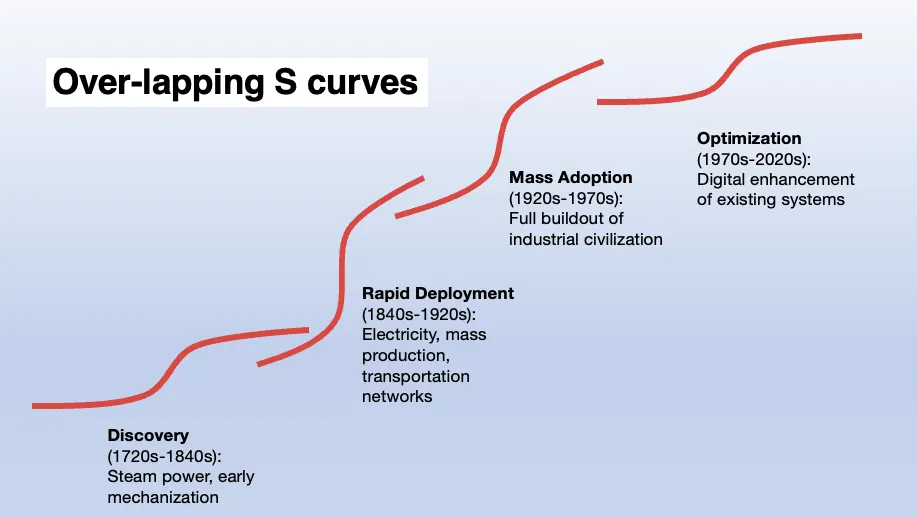
If we are not accelerating exponentially, we are living through something far more interesting: the overlap between the final optimisation of one technological age and the early discovery phase of the next.
Multiple breakthrough technologies are currently in development that could each reshape civilisation as fundamentally as electricity or the internet.
The pattern of progress isn’t “up only” - but it is “up sometimes.” And those “sometimes” periods change everything.
This second part now looks deeper into our conception of progress, and where our next paradigm shifts will come from.
Progress as a concept
There is a dominant cultural touch stone in Western civilisation of “progress” - that things were previously worse, and through science and liberal social + economic policies everything gets better.
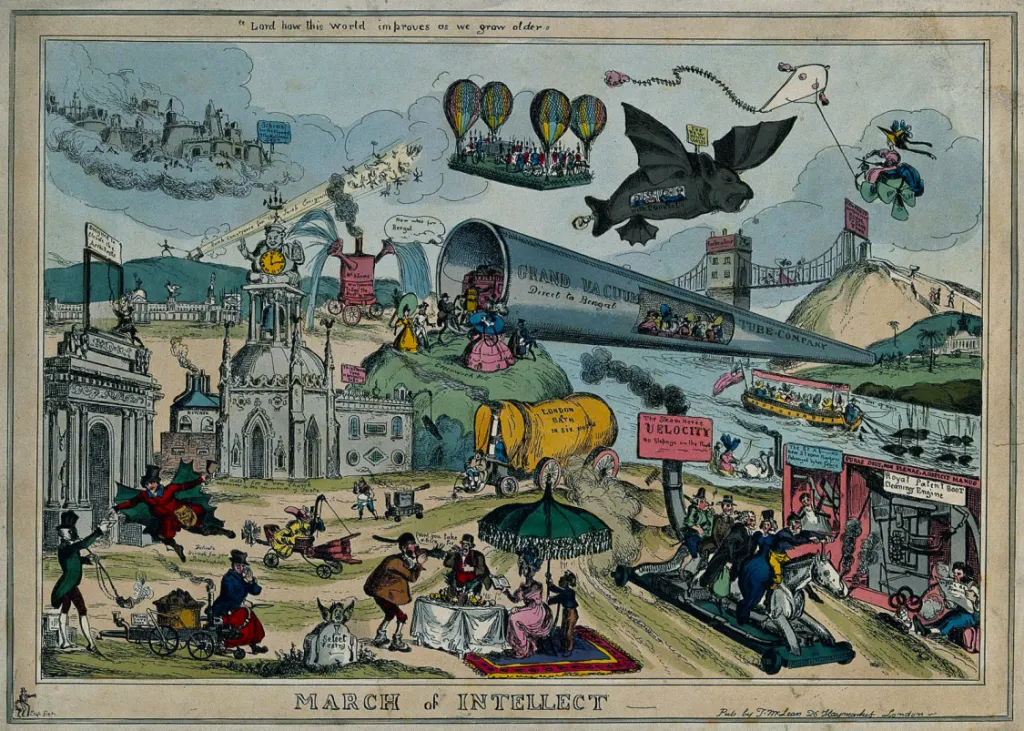
We have a shared cultural zeitgeist, of a linear view on progress coming from the Enlightenment, and more recently the stability in the developed world since 1945. During the Age of Enlightenment, history began to be seen as both linear and irreversible. And since ww2, the Western worldview was the “good guys” won, and the march of reason continues to the final form of government, democracy and “the end of history” (!).
 Francis Fukuyama (1992) - the end of history?
But in the arc of history “Progress” is not the default
Most ancient cultures held mythical and theological concepts of history and of time that were not linear. Such societies saw history as cyclical, with alternating Dark and Golden Ages.
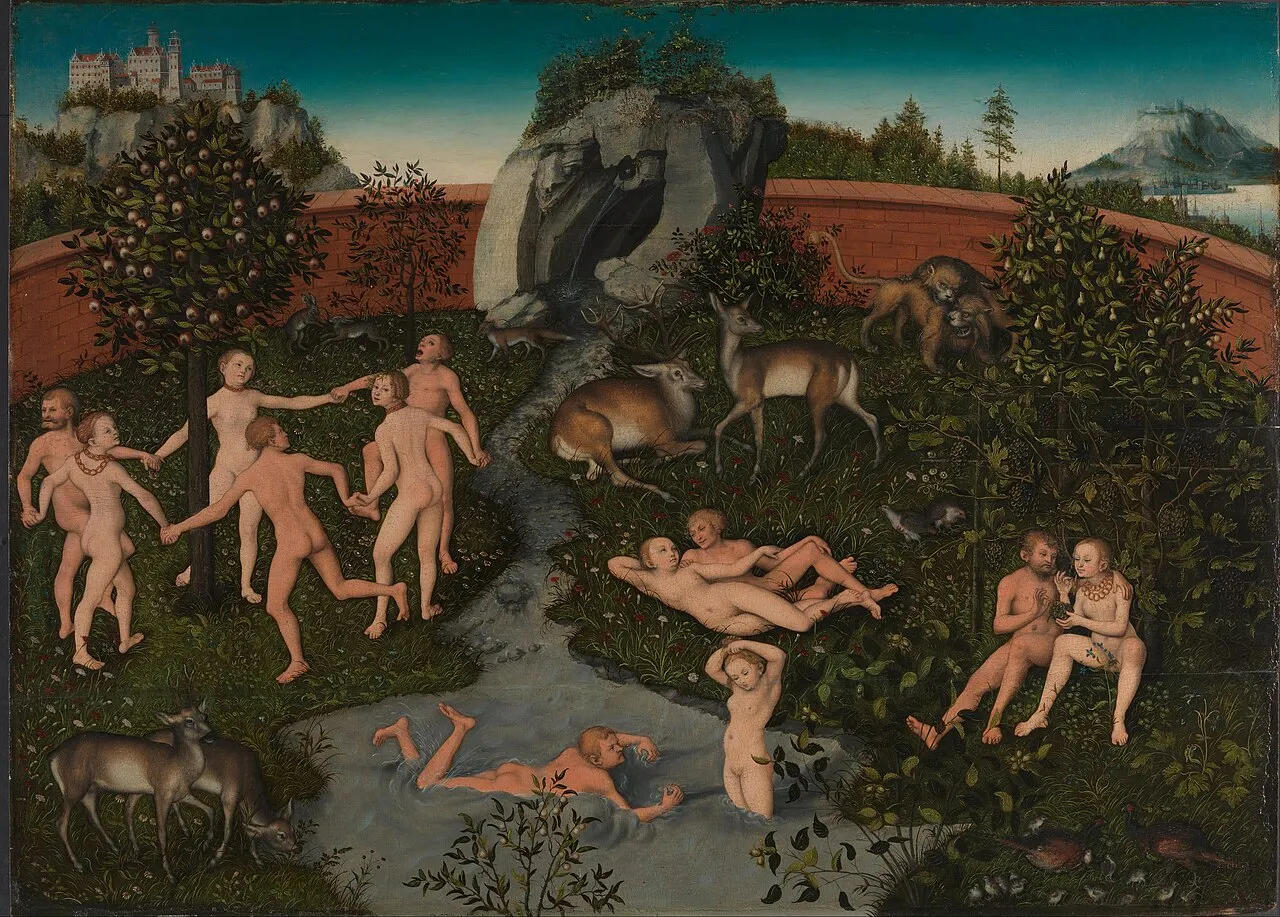
This idea was very deeply rooted in European Classicism. Here Greek philosopher Heriod talked about a historic “golden age” with steps of progressive decline after that, with each successive age, being represented by a lower value, but harder metal.
In the Golden Age – humans were said to live among the gods and freely mingled with them. Peace and harmony prevailed during this age.
In the Iron Age (Hesiod, and presumably both you and I find ourselves in this age) Humans live an existence of toil and misery. Children dishonor their parents, brother fights with brother, might makes right, and bad men use lies to be thought good and the gods have completely forsaken humanity
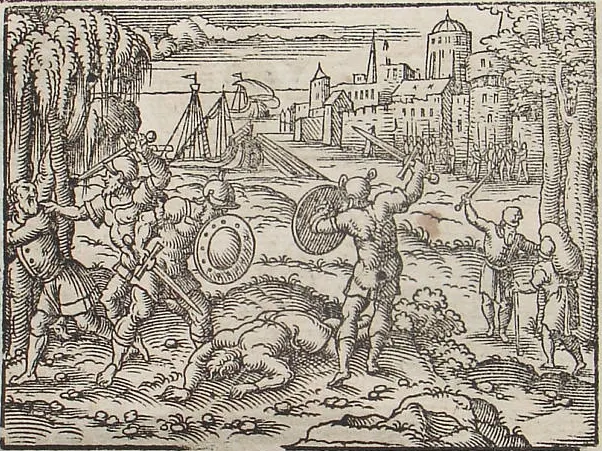
Sound familiar? Maybe everyone thinks they are living in the Iron Age, and the golden age is coming soon.
There is an echo of this in our tough times create strong people, strong people create good times, good times create weak people, weak people create tough times syllogism. Again coming back to the “time is a flat circle” movement gaining ground in popular thought.
For hundreds of years, decline was the meta-model
Consider the medieval worldview: for centuries, the overriding belief was that civilization’s role was to stave off inevitable decline. Imagine you are sitting among the ruins of incredible ancient civilizations - Roman aqueducts, Greek temples, roads and amphitheatres with no idea on how people from the past were able to create and maintain this level of complexity.
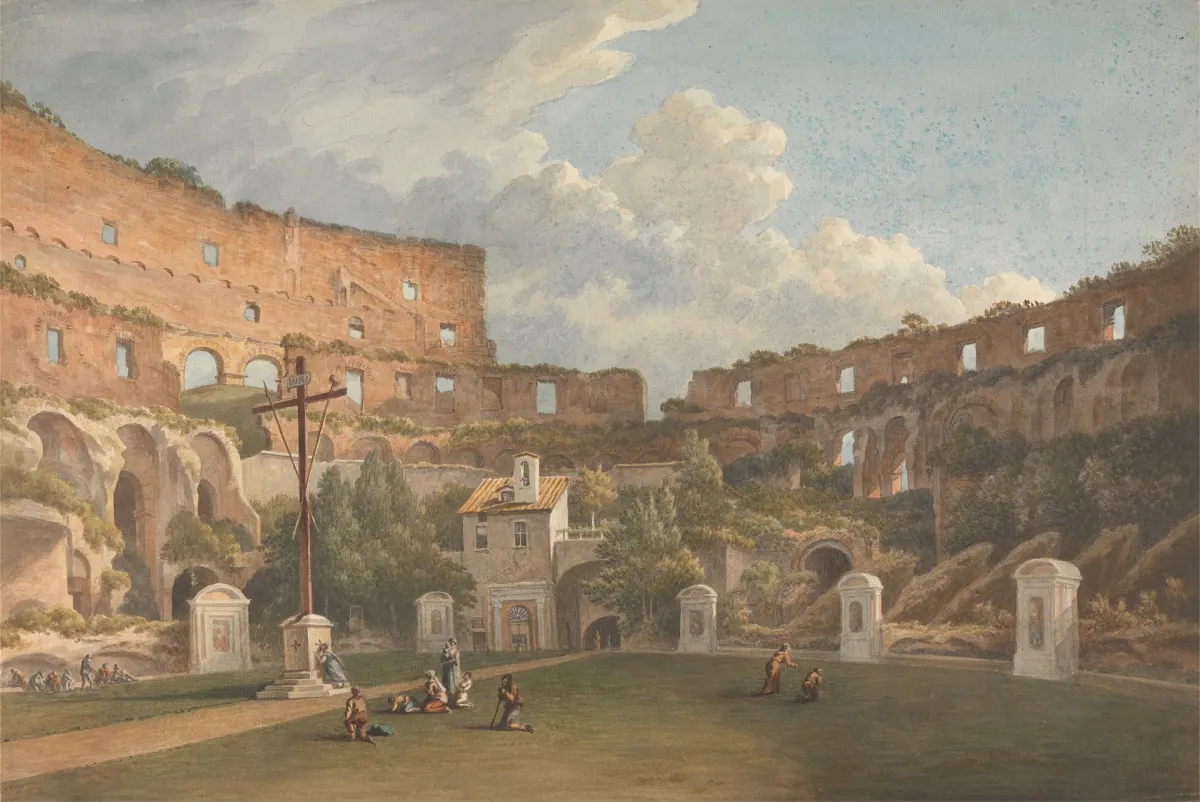
From this perspective, the dominant narrative was that history was at BEST cyclical, at worst a story of long-term decay. Golden ages lay firmly in the past: Eden, classical antiquity, while the future promised corruption and divine judgment rather than human perfectibility.
Every generation could point to crumbling infrastructure they couldn’t rebuild, lost knowledge they couldn’t recover, and techniques they couldn’t replicate. The medieval expectation was that all earthly glory leads to final reckoning, not improvement.
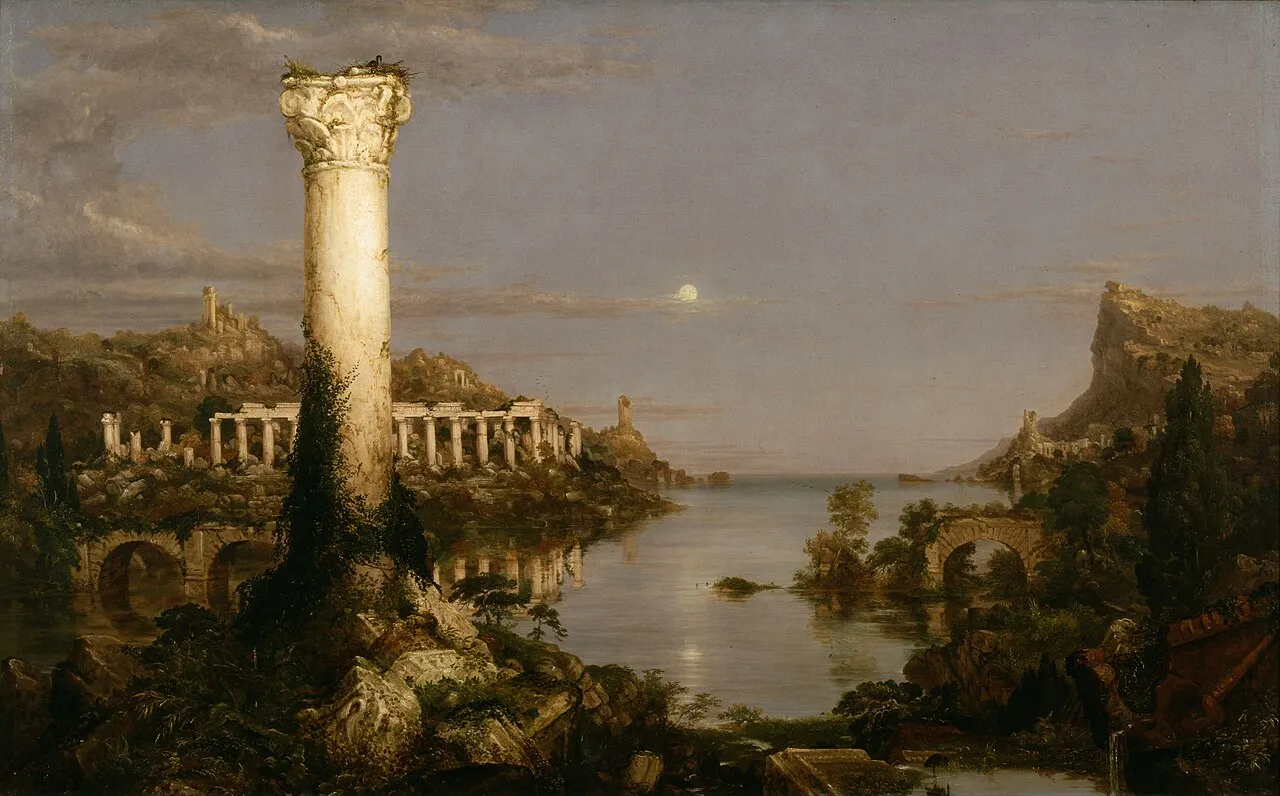 Desolation: The Course of Empire
Written in the 8th century, an anonymous Anglo-Saxon poet describes in “The Ruin” the remnants of a previous great civilisation:
Bright were the halls then, many the bath-houses,
High the gables, loud the joyful clamor,
Many the meadhalls full of delights
Until mighty Fate overthrew it all.
Wide was the slaughter, the plague-time came,
Death took away all those brave men.
Broken their ramparts, fallen their halls,
The city decayed; those who built it
Fell to the earth. Thus these courts crumble,
And roof-tiles fall from this arch of stone.
The medieval expectation that history culminates in destruction, not betterment, and human history has a trajectory toward corruption and damnation. For most of human history, people expected their children’s lives to be roughly similar to their own, or worse.
The idea of inevitable progress is historically aberrant, mostly a 19th-20th century Western concept.
In the same way it took many hundreds of years for this underlying perception to change - via the Renaissance, the Enlightenment and then the Industrial + Scientific Revolution, our dominant view is one of growth.
It would not necessarily be the case that we immediately notice a difference as we hit the plateau, and it could take a long time of relative stagnation for our perceptions to change.
The current rise of populism, and the feeling of relative decline in our national and international politics could be our initial cultural realisation that we are on a plateau.
Where will productivity drivers come from?
If we accept that significant trigger points can move us from periods of plateau to new levels of progress, then it’s worth examining what drives those transformational moments and where the next ones might emerge. Where is the next productivity boost coming from?
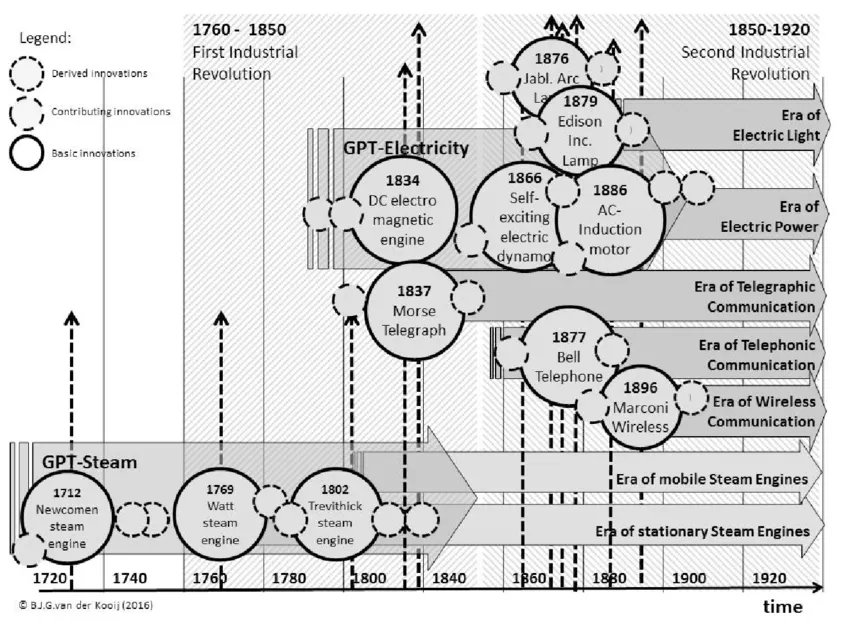 ”The Long Singularity” - from a human to a mechanised and automated society
Fortunately, there’s already an established framework for understanding these breakthrough technologies: “General Purpose Technologies”. And yes, I’m sure it’s no coincidence that ChatGPT carries that name.
You down with GPT? Yea you know me
Richard Lipsey, who I presume is the same guy who wrote my A-level economics textbook created this concept. General-purpose technologies (GPTs) are technologies that will affect an entire society. GPTs have the potential to drastically alter economies through their impact on pre-existing economic and social structures.
There are four key characteristics that separate truly transformative technologies from incremental improvements.
- It must be a single, recognizable technology - not a collection of related advances, but something you can point to and name.
- There needs to be substantial scope for improvement after its initial introduction, meaning the technology gets dramatically better over time rather than hitting quick limits.
- It must find widespread application across the economy, touching multiple industries and sectors rather than remaining confined to a niche.
- Perhaps most importantly, it creates significant spillover effects - enabling entirely new technologies, business models, and ways of organizing society that weren’t possible before.
Looking at the historical record, these GPTs don’t arrive on a predictable schedule. Instead, they cluster around certain periods and then spread their influence over decades or even centuries.
The domestication of plants and animals kicked off sedentary civilization itself. The printing press enabled mass literacy, scientific revolution, and ultimately democracy. Steam power created the modern industrial economy. Electricity transformed manufacturing, communications, and daily life in ways its inventors never imagined.
Lipsey’s General Purpose Technologies
Here is a quick precis of the 24 GPTs identified in the book
Lipsey’s 24 General Purpose Technologies
- Domestication of plants (9000-8000 BC) - Neolithic agricultural revolution
- Domestication of animals (8500-7500 BC) - Neolithic agricultural revolution, working animals
- Smelting of ore (8000-7000 BC) - Early metal tools
- Money (9000-6000 BC) - Trade, record keeping
- Wheel (4000-3000 BC) - Mechanization, potter’s wheel
- Writing (3400-3200 BC) - Trade, record keeping, poetry
- Bronze (2800 BC) - Tools and weapons
- Iron (1200 BC) - Tools and weapons
- Water wheel (Early Middle Ages) - Inanimate power, mechanical systems
- Three-masted sailing ship (15th century) - Discovery of the New World, maritime trade, colonialism
- Printing (16th century) - Knowledge economy, science education, financial credit
- Factory system (late 18th century) - Industrial Revolution, interchangeable parts
- Steam engine (late 18th century) - Industrial Revolution, machine tools
- Railways (mid 19th century) - Suburbs, commuting, flexible location of factories
- Iron steamship (mid 19th century) - Global agricultural trade, international tourism, dreadnought battleships
- Internal combustion engine (late 19th century) - Automobile, airplane, oil industry, mobile warfare
- Electricity (late 19th century) - Centralized power generation, factory electrification, telegraphic communication
- Automobile (20th century) - Suburbs, commuting, shopping centers, long-distance domestic tourism
- Airplane (20th century) - International tourism, international sports leagues, mobile warfare
- Mass production (20th century) - Consumerism, growth of US economy, industrial warfare
- Computer (20th century) - Digital Revolution, Internet
- Lean production (20th century) - Growth of Japanese economy, agile software development
- Internet (20th century) - Electronic business, crowdsourcing, social networking, information warfare
- Biotechnology (20th century) - Genetically modified food, bioengineering, gene therapy
Each of these technologies solved fundamental constraints that had limited human capability for generations - that is to say, they made previously impossible things possible.
This historical pattern suggests we should be looking not for the next optimisation of current technologies, but for breakthroughs that remove fundamental bottlenecks in how we organize energy, materials, information, or coordination.
The question is just when these trigger points come.
The Long Wave of tech transformation
Before we explore specific technologies, we need to understand the rhythm of how breakthrough innovations actually emerge and spread through economies.
In the 1920s, Russian economist Nikolai Kondratiev made an unfortunate discovery (for him): capitalism wasn’t heading toward inevitable collapse, but followed predictable 50-60 year cycles of innovation and growth.
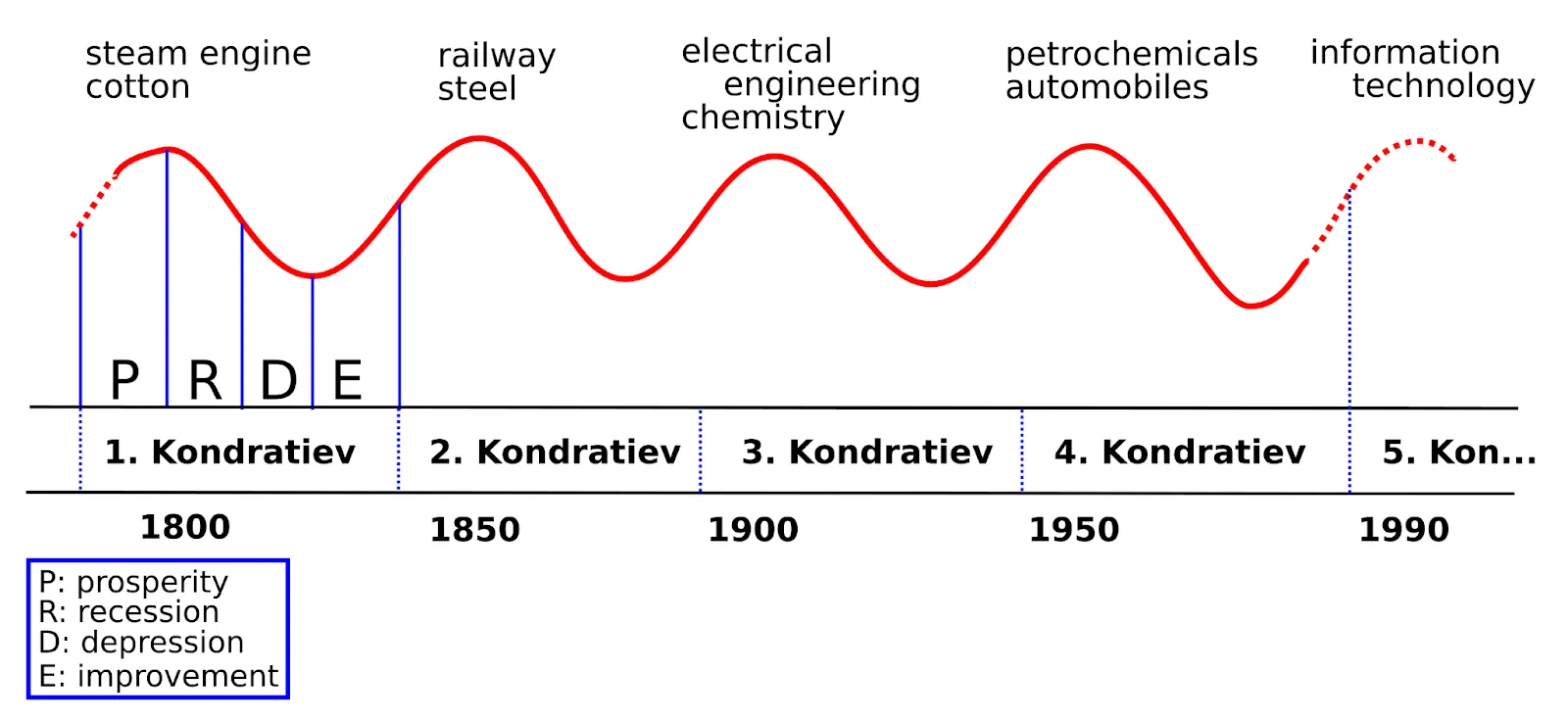
Studying price data, patents, and production statistics across multiple countries, Kondratiev identified “long waves” where new technologies would emerge, gradually transform entire economies, then plateau as the next wave began building. Of course telling Uncle Joe that capitalism had natural renewal cycles was not conducive to a long healthy lifetime in Communist Russia. Kondratiev disappeared into the Gulag in 1930, but his theory lived on.
This maps remarkably well onto the four-phase Industrial Revolution I outlined in Part 1:
Phase 1 (1720s-1840s): Mechanizing Physical Power
- Steam engines replace human/animal muscle power
- Kondratiev’s first wave: steam, textiles, iron
Phase 2 (1840s-1920s): Systematizing Production
- Assembly lines, electricity, railways/telegraph
- Kondratiev’s second and third waves: railways/steel, then electricity/chemicals
Phase 3 (1920s-1970s): Automating Communication
- Mass production, telephone networks, corporate organization
- Kondratiev’s fourth wave: electronics, aviation, petrochemicals
Phase 4 (1970s-2020s): Digitising Information Processing
- Computers, internet, software automation
- Kondratiev’s fifth wave: information technology, internet, mobile
If this pattern holds, we’re approaching the end of the fifth wave - the information technology revolution that began in the 1990s. The productivity slowdown and technological stagnation we explored in Part 1 are exactly what you’d expect as a major wave reaches maturity.
Now for the optimistic part: maybe we’re in the infrastructure-building phase of whatever comes next.
The Next Trigger GPTs: It’s All About Infrastructure
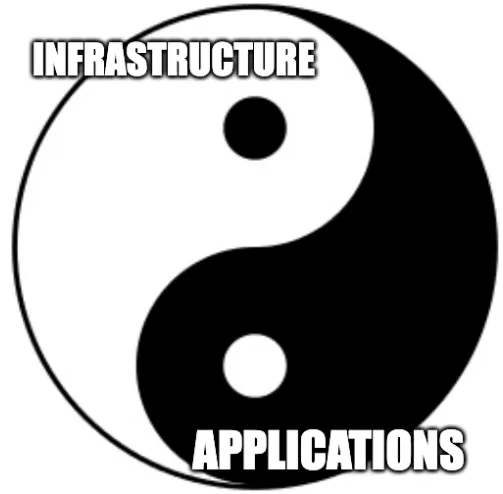
We need to think in layers. Technology development follows a predictable pattern: infrastructure first, applications second.
Consider the internet’s evolution. In the 1970s and 80s, engineers built the foundational protocols TCP/IP, HTTP, DNS that seemed abstract and useless to most people.The crypto world has a useful concept about infrastructure and application cycles. First, you build the foundational infrastructure - the protocols, the base layer technologies, the essential capabilities that enable everything else.
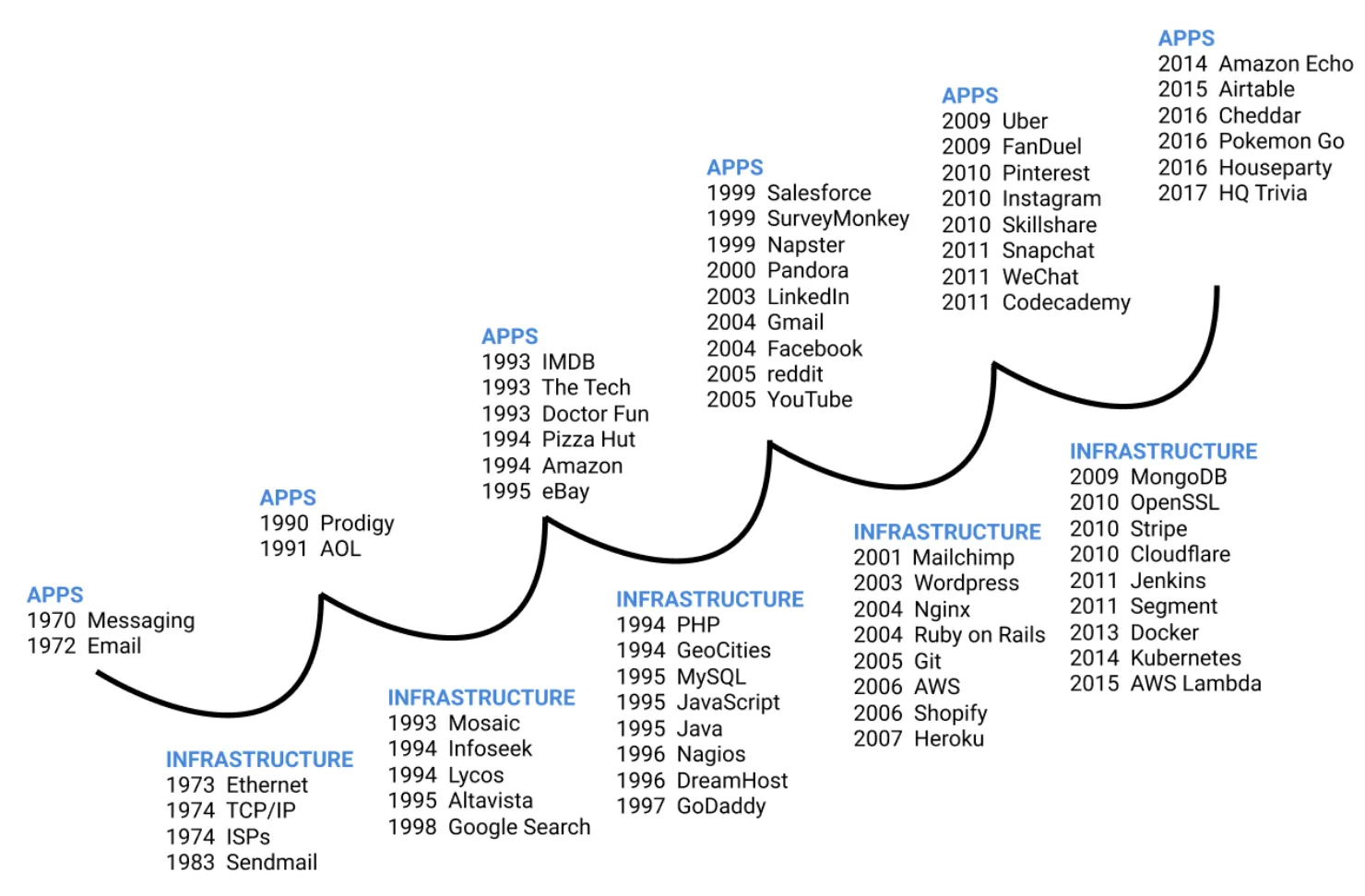
Only after this infrastructure is solid can developers build the applications we actually use: websites, email, e-commerce, social networks.
Only then can you build the applications that users actually interact with - and eventually the applications start driving new requirements on the infrastructure, and we have this positively reinforcing loop.
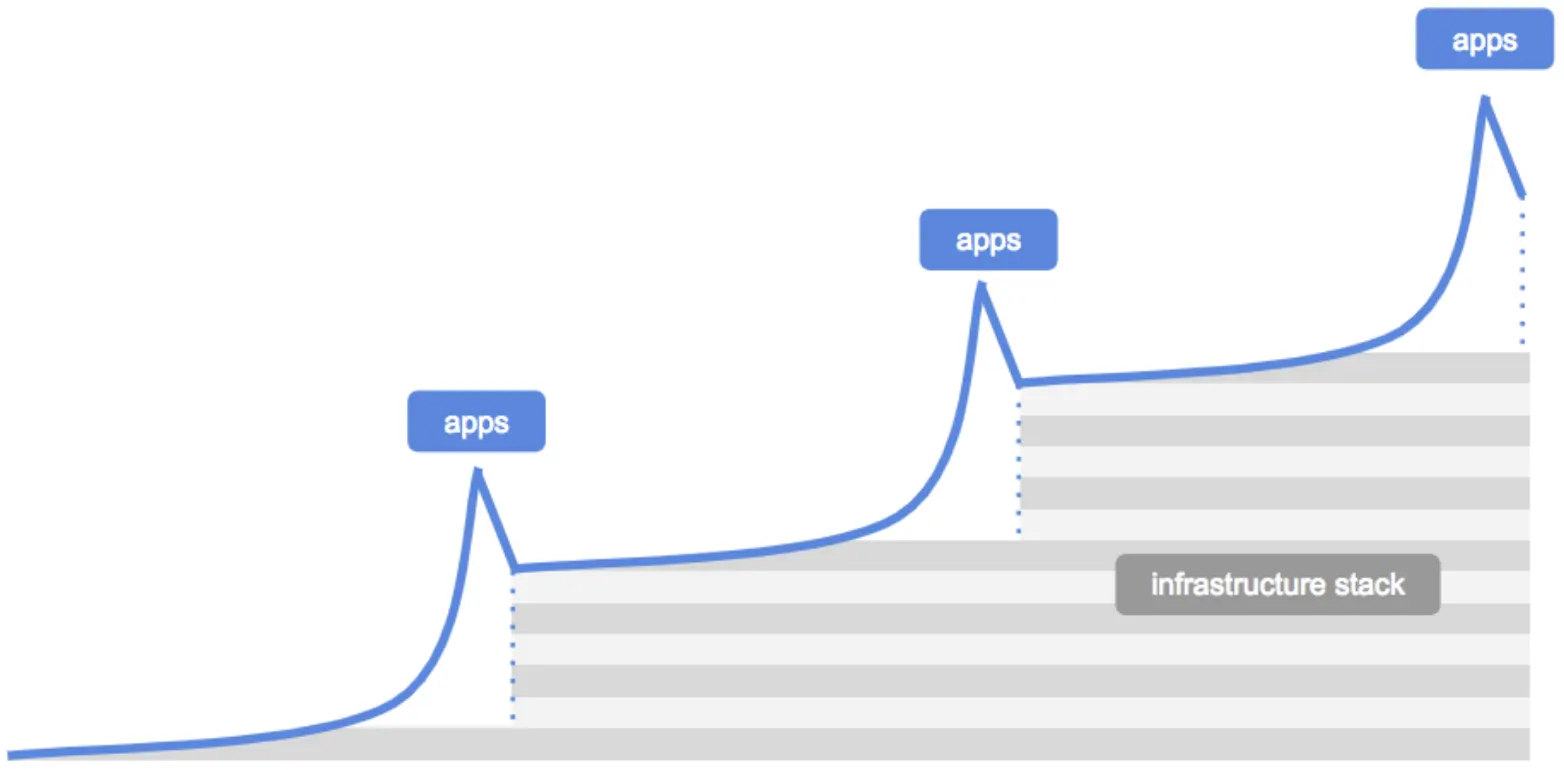 https://www.usv.com/writing/2018/10/the-myth-of-the-infrastructure-phase/
GPTs work the same way. They are infrastructure platforms that enable entire ecosystems of innovation.
The printing press isn’t valuable because it made books cheaper - the transformation comes because it created the infrastructure for mass literacy, scientific journals, newspapers, and democratic participation. Steam power enabled factory systems, railway networks, and global trade that were impossible before. Electricity created the infrastructure to enable mass production, telecommunications, and urban development.
If we’re approaching the end of the information technology wave, the next set of GPTs are likely being assembled right now in research labs and startup garages looking useless to most people, but laying the groundwork for applications we can’t yet imagine.
Let’s think about GPTs as these infrastructure layers that enable new applications
Is AI a General Purpose Technology or a bubble?
Before we scan the horizon for the next wave of transformative technologies, let’s address the elephant in the room. “But surely,” you might say, “the singularity is coming soon, and AI will change everything exponentially.” It’s a fair objection, and one that deserves a serious response rather than dismissive hand-waving.
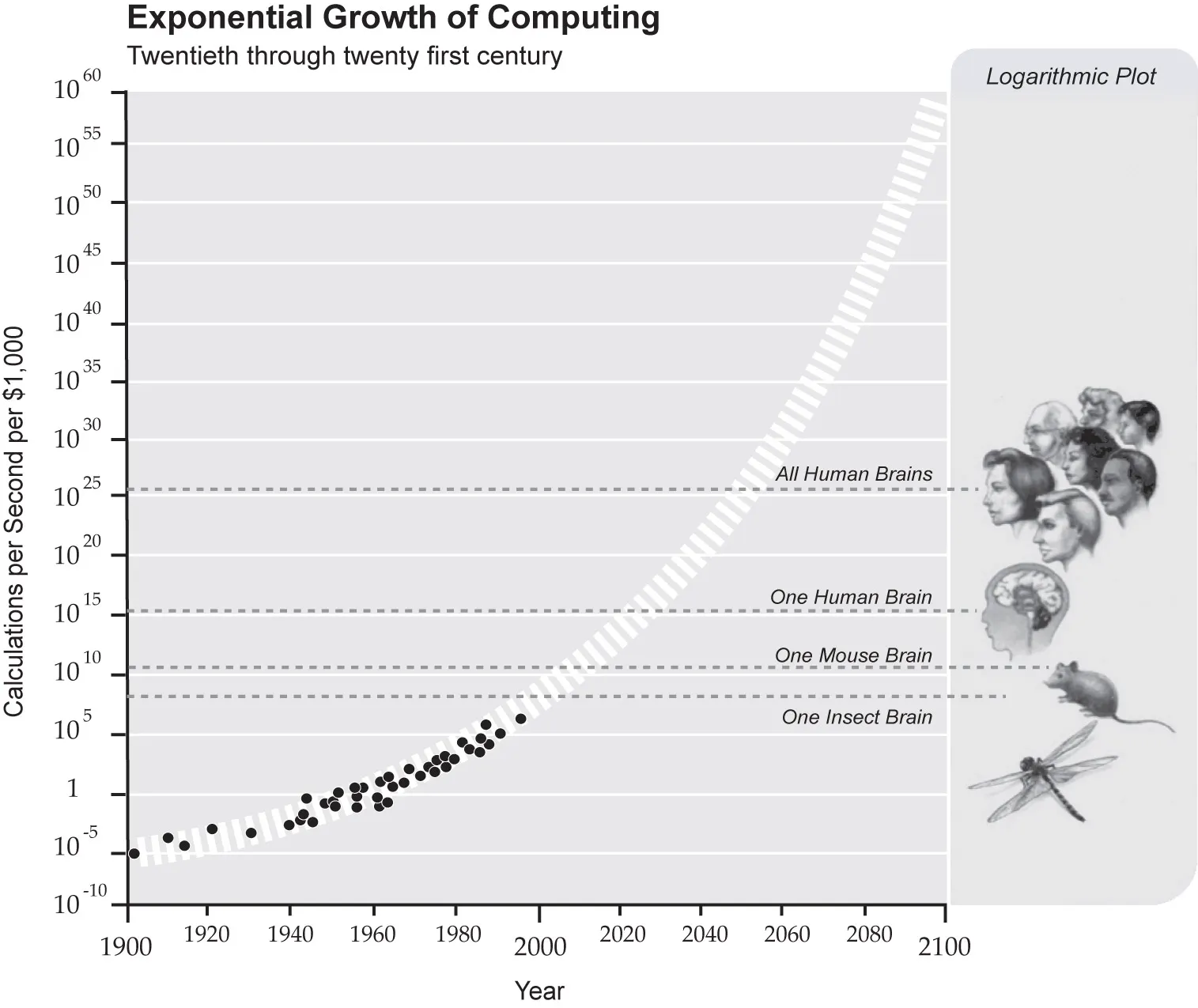
Winter is coming

The challenge with AI predictions is that we’ve heard this story before. In the 1950s, researchers confidently predicted that machines would achieve human-level intelligence within a generation.
Herbert Simon famously declared in 1965 that “machines will be capable, within twenty years, of doing any work a man can do.”
Marvin Minsky suggested in 1967 that within a generation, the problem of creating artificial intelligence would be “substantially solved”.
Minsky was a great one for a soundbite, also wrote in 1988:
“Within 10 years computers won’t even keep us as pets.”
What happened? Where did those predictions go? They ran headlong into what became known as a rolling cycle of “AI winters” - periods when the grand promises failed to materialize, funding dried up, and the field retreated to work on more modest problems.
There have been huge advances - and these have been integrated into the Information Technology Revolution. What we call “computers” or “databases” or “automation” today, were once “AI”.
It’s a phenomenon captured by Larry Tesler’s zinger:
“AI is whatever hasn’t been done yet.”
Databases and data management used to be a field of AI. Optical character recognition (OCR) was AI until it worked reliably. Chess-playing programs were AI until Deep Blue and now it’s on every PC and website. Even sophisticated warehouse automation systems were considered AI until they became standard logistics stuff.
My view is AI today represents something more like the final optimization phase of the information technology S-curve rather than the beginning of an entirely new one. We talk about LLMs as this new unlock of exponentiality, and it may be so, but perhaps we need more confirmation than your latest Linkedin trends presentation before we make that leap.
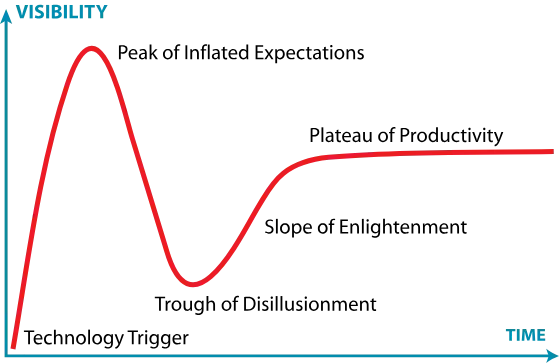
Where on this hype cycle do you think LLMs are now? Where was “the metaverse” in 2021. What about the Singularity? Let’s come onto that soon…
Now this is not to be down on bubbles. I for one know and believe in the power of bubbles to make change. Bubbles happen when a huge opportunity is identified, that cannot be effectively “priced”.
So what are the next big triggers?
My top candidates for big triggers
- Superintelligence: AI that exceeds human capabilities across all domains (to be discussed how close we are to this)
- Energy Systems: Cheap, abundant, storable energy changing everything energy-intensive
- Biological Programming: Programming living systems like we program computers
- Advanced Materials: Room-temperature superconductors and programmable matter
- Space Economy: Using zero gravity and vacuum for impossible-on-Earth processes, and creating new economic models across the timeless whorls of space
Each of these are currently in a 20+ year discovery phase, that will then be followed by a 20-30 year implementation window. I am sure there are others, but these are in my view the “known unknowns”.
Unlike optimisations of current technologies, each represents a potential solution to fundamental constraints that have limited human capability for decades or centuries. And crucially, each could serve as a platform enabling countless other innovations we can’t yet imagine. We will look at these in detail in a later post.
Coda

The pattern across all potential GPTs is that they’re currently in early discovery phases, attracting venture capital and research attention but not yet deployed at scale.
The transition periods between technological ages create enormous opportunities but only if we can see the signal from the noise.
In Part 3, we’ll examine each candidate GPT in detail: which are closest to breakthrough, what the early signals look like, and how to position yourself for the next wave rather than getting caught in the wake of the last one
This article is the second in what is turning into both a personal bête-noire and an ongoing series.
If you missed Part 1… click here to read why We do not live in exponential times