The pendulum swings: when Capital leverage is greater than Labour leverage
Productivity is shifting from wages to watts. From the Jacquard loom to compute clusters: how productivity gains reshape bargaining power.
This is Part 2 in a series exploring second-order effects of automation that markets aren’t pricing in. Read Part 1 here.
The core thesis, briefly
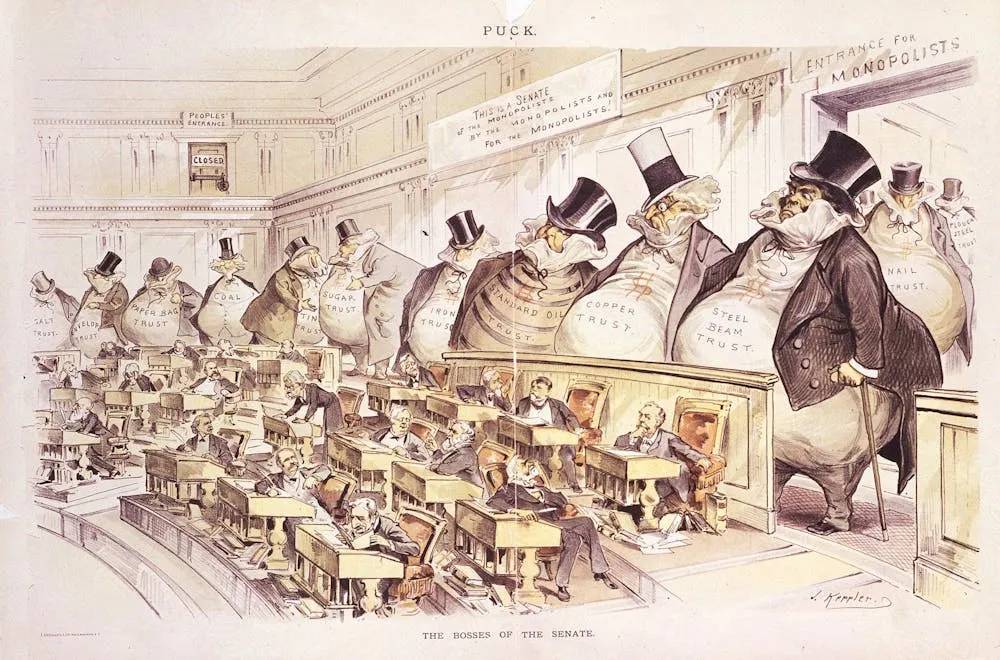
When productive activity shifts from humans to machines, we’re not just automating tasks — we’re relocating where economic value gets created and captured. First-order consequences are obvious: jobs automated, productivity improved, some companies win. Everyone sees this.
The second bounce — the structural reorganisation that follows — is where the alpha is. Over this series, I’m exploring five cascading effects: (1) labour’s bargaining power collapses, (2) government revenue models break, (3) geography matters again around energy, (4) organisations restructure fundamentally, and (5) infrastructure becomes the chokepoint.
This post dives into the first: what happens when the pendulum swings decisively toward capital?
Ned Ludd’s proclamation

Ned Lud’s Proclamation 23 Decr 1811
I do hereby discharge, all manner of Persons, who has been, employ’d by me, in giveing any information, of breaking Frames, to the Town Clerk, or to the Corporation Silley Committee ~ any Person found out, in so doing or attempting to give any information, will be Punish’d with death, or any Constable found out making any enquiries, so has to hurt the Cause of Ned, or any of his army, Death (by order of King Lud)
Technology has been a huge driver of human wellbeing
We remember the industrial revolution as a great driver of prosperity in the long run for everyone — people lifted out of poverty, consumer goods.
Today nearly everyone in Europe has a better life than a King in the 14th century. Even Mansa Musa didn’t have Netflix
 The richest person in history never once had the opportunity to Netflix and chill
But the “long run” does a lot of work here, and in reality the long run was about 3 generations, and the transition was brutal for the people living there.
The pendulum swings
The industrial revolution created capital-intensive businesses, but workers remained essential. You could build a massive textile mill, but you still needed hundreds of people to operate the machines, maintain the equipment, and manage the floor.
Labour had leverage, because capital without labour produced nothing.
 We want recognition for our skill
Fruit of the loom?
Weaving is the classic case study of the industrial revolution. Everyone surely has heard of the “Spinning Jenny” and the transition from cottage industry to giant manufactories.
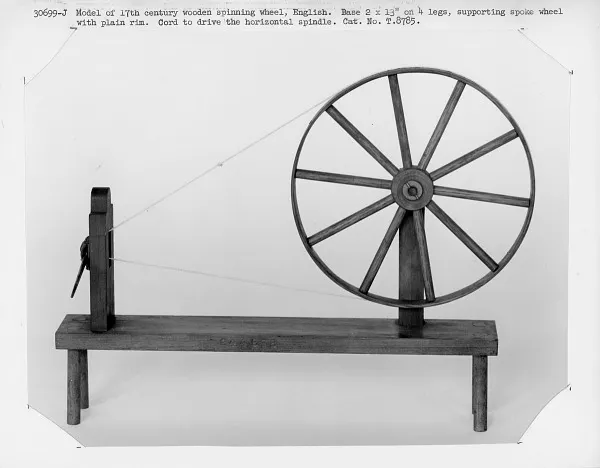
During medieval times, everyone was involved in spinning. It was the primary free-time activity for young people, and women were able to add a significant portion of the family income by spinning at home using one of these - a wooden spinning wheel, which in the 1750s cost around 1 Shilling to buy.
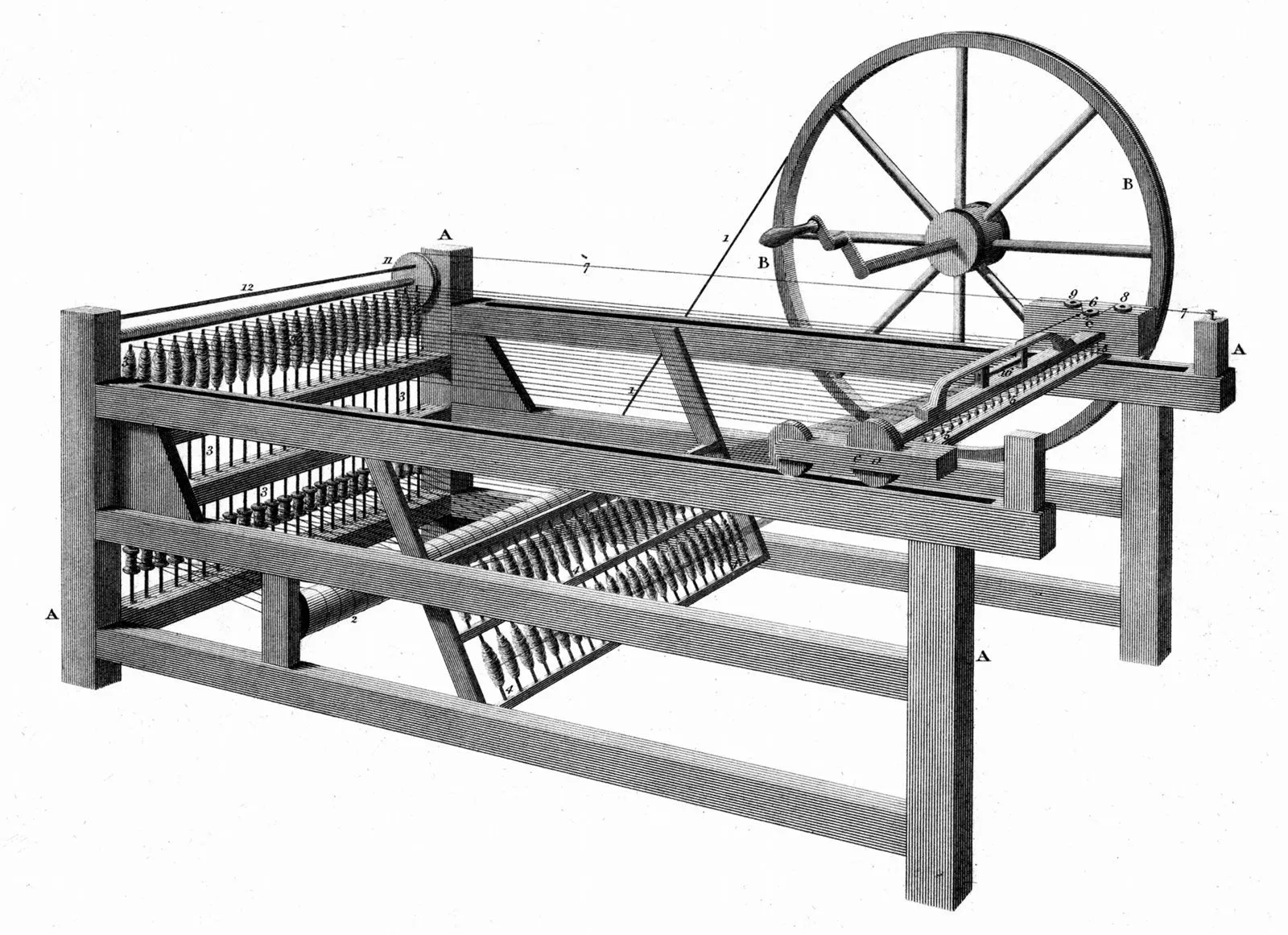
During the 1760s, a 24 spindle Spinning Jenny did the work of 24 people with a single operator, and cost 70 shillings to buy.
A few years later, Crompton’s invention of the “Mule” took this further, and in 1795 a 144 spindle machine cost around £30 (600 shillings).
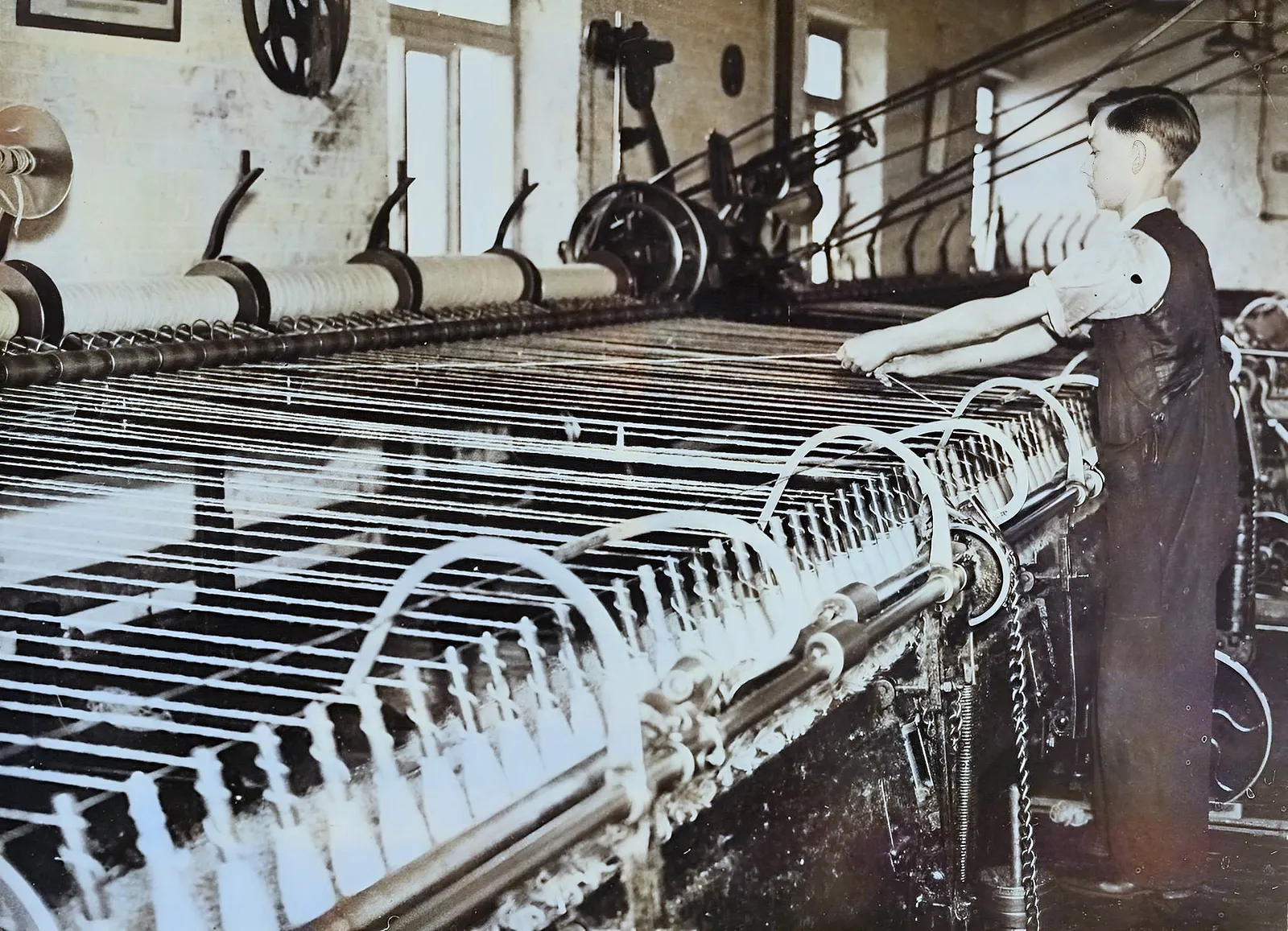 Mules were eventually scaled to fill huge “Manufactories”
As these multipliers increased, capital requirements grew proportionally. And as production scaled the cost per “piece” of wool declined dramatically - a huge net benefit for the economy, but challenging in the “short run” (80 years) for the people involved.
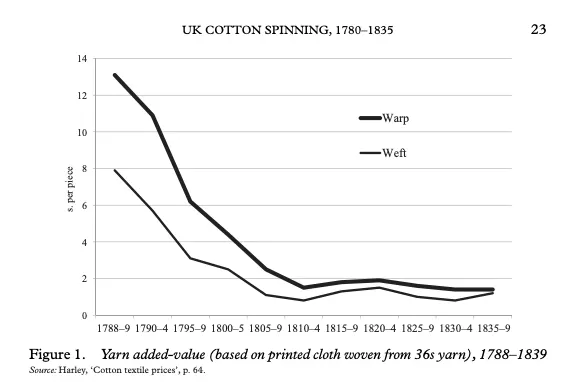
Using an early form of punch-card coding for complex patterns, from the 1810s the Jacquard loom took on not just spinning the thread, now the machine did complex weaving too.

Note what’s happening here is progressive automation with capital replacing human input - as well as vertical integration across the stack.
You could own a Spinning Jenny as an independent craftsperson. You needed factory capital for power looms and Jacquard machines. Handloom weavers in Britain saw their numbers collapse from 250,000 to 50,000 over two decades.
The Luddites weren’t anti-technology — they were skilled craftsmen watching machines produce in one day what previously took them a month, while factory owners captured all the value from productivity gains.
Their bargaining power evaporated overnight. It took three generations before living standards recovered to pre-automation levels for textile workers.
The compute moat: who can compete?
The startup ecosystem faces a similar structural challenge. In the cloud era, a small team could compete with incumbents through better execution. Capital requirements were manageable — some AWS credits, talented engineers, clever product decisions.
This was the Spinning Jenny era of software engineering
The AI era restores capital as a competitive moat. Frontier model training costs hundreds of millions. Inference at scale requires infrastructure most startups can’t afford.
Welcome to the era of Crompton’s Mule.

The companies that can fund the compute arms race will be the ones already sitting on massive capital reserves or infrastructure: big tech firms with existing data centres, or heavily funded startups that raised billions early.
Now we are moving our thread spinning into factories. But the factories are giant compute clusters with machines doing the coding, rather than people. This is white collar automation.
Robber Barons in the Gilded Age
This creates a split: infrastructure providers versus infrastructure consumers. The providers — companies building and operating compute infrastructure — capture most of the value through recurring revenue from everyone else.
The consumers rent capacity and compete on application logic, but they’re paying someone else’s capital costs plus margin.
Shifting gears a little. We now head to the USA around 80 years later
By the late 1800s, the real money shifted from production to infrastructure control. In the USA, Standard Oil owned the pipelines, railways, and refineries everyone else depended on. By 1880, Rockefeller controlled 90% of US oil refining.
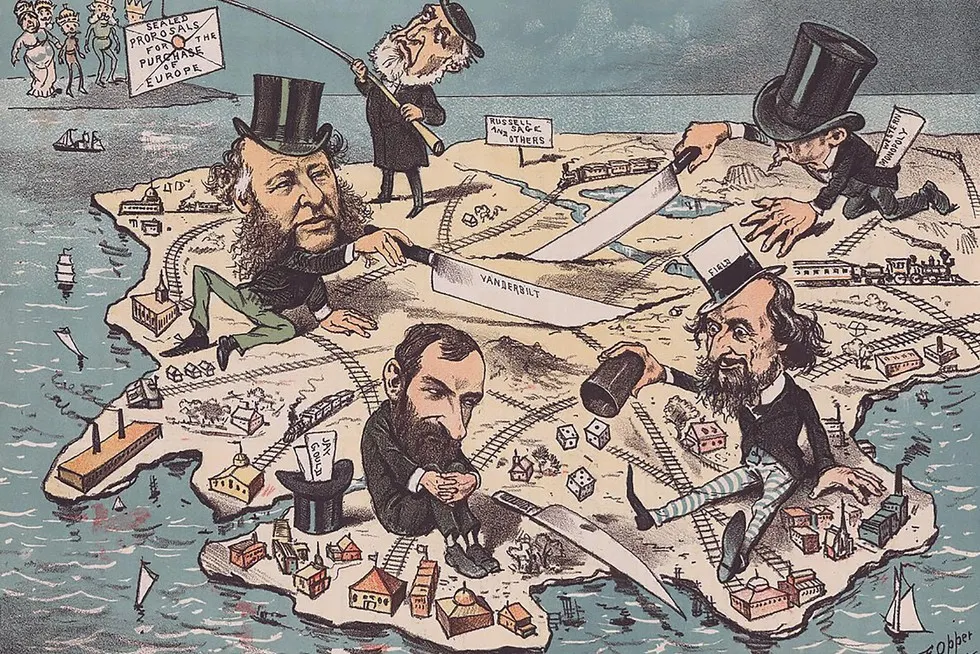
The railroad barons — Vanderbilt, Gould, JP Morgan — controlled transportation infrastructure and could make or break entire industries through freight rates alone. These monopolies became so powerful they threatened democracy itself. It took 40 years and government antitrust action to break them up.
The lesson: as productivity gains from technology accelerate, power concentrates in whoever controls the infrastructure layer.
We are seeing this today with our large tech and AI companies moving towards affecting the governance layer as well as the economic one.
AI follows the same pattern. Early productivity gains are distributed — anyone with AWS credits can build. But as the multipliers increase, capital requirements grow. And the mature phase won’t be about who builds the best models. It will be about who controls the infrastructure everyone else depends on.
Emad Mostaque captured the transition point
▶ Watch the video in the original post on Substack
“Next year is the year that AI models go from not being good enough—the dumb member of your team—then overnight, it becomes good enough. And then the job losses start and we don’t know where they end. Because you don’t need to hire back if your company is more productive.”
This whole interview is worth watching on YouTube
Bargaining power collapses
Labour’s share of GDP has been declining for decades as the information technology revolution gains pace (see diagram).
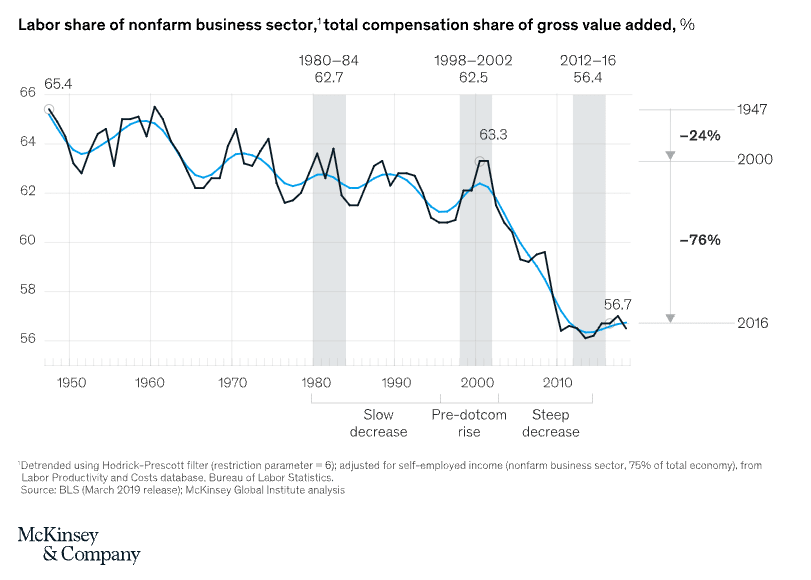
Workers could historically organise, strike, and demand better wages. This assumes workers had something to bargain with: their labour.
The Luddites had work available — tending the new machines. But at a fraction of their previous wages, with none of their previous leverage. A master weaver’s 20 years of skill became worthless when machines could do “good enough” work.
This is what happens when capital can achieve productivity without skilled workers: the returns flow entirely to capital owners, and labour has nothing to withhold.
When productivity comes from capital rather than workers, inequality stops being a policy choice and becomes a structural feature.
The returns flow to whoever owns the compute infrastructure.
Workers who remain employed might be well-paid (managing AI systems requires skill), but there will be far fewer of them, and they’ll have minimal leverage.
During the 18th and 19th centuries, we saw periods of widespread unemployment as mass manufacturing automated agricultural work, and then domestic manufacturing.
Real wages eventually rose because industrial production still required human workers, and deflationary effect on manufactured goods over time stimulated new industries which had not existed before.
In the long run
The Industrial Revolution eventually created more jobs and prosperity. But “eventually” meant 100 years of dislocation.
Multiple generations experienced wage collapse and skill devaluation before new equilibria emerged.
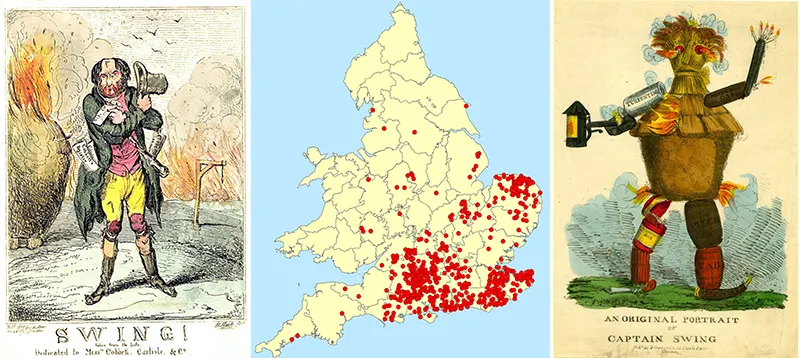
Over four months in 1830 agricultural labourers launched the largest movement of social unrest in 19th-century England. More than 1,400 separate incidents were recorded, and hundreds of riots across the country destroyed thousands of threshing machines in what became known as the “Swing Riots”. A mob attacked the Prime Minister, the Duke of Wellington’s London home and the government fell within days.
The response was harsh with 19 people hanged, 500 transported for life to Australia and thousands imprisoned - but it began a century of reform:

How much political pressure will there be for redistribution mechanisms — not from progressive ideology, but from practical necessity when most people can’t participate in the economy through traditional employment.
Some jurisdictions will experiment with Universal Basic Income (UBI) or similar schemes. Others will face instability as the social contract unravels.
The question is about who captures productivity gains during the transition, and how long that transition takes.
Investment angles: follow the infrastructure
The obvious play:
Companies with existing compute moats, and those with scarce know-how and the ability to raise huge amounts of money quickly.
Here is a list of extremely high valuations for very early stage AI companies competing at the model layer
- Humans& (2025) | Raised: $1B* | Valuation: $4B*
- Isara (2025) | Raised: Hundreds of millions* | Valuation: $1B*
- Richard Socher’s Lab (2025) | Raised: $1B* | Valuation: Not disclosed
- General Intuition (2025) | Raised: $133.7M
- Periodic Labs (Sept 2025) | Raised: $300M | Valuation: $1B
- Thinking Machines Lab (Feb 2025) | Raised: $2B | Valuation: $10B
- Inception Labs (July 2024) | Raised: $50M
- Safe Superintelligence (June 2024) | Raised: >$3B | Valuation: $32B
- Reflection AI (March 2024) | Raised: $2.13B | Valuation: $8B
- Poolside (April 2023) | Raised: $626M | Valuation: $3B
Thanks to Elana Gold from Red Beard Ventures for these data
Big tech firms that already own massive infrastructure will extend their advantage. Some new players will succeed when they can raise money fast enough to get scale. These folks will then rent those capabilities to everyone else, and hopefully that margin would be protected for long enough before it deflates away…
The less obvious play
What if we look one layer deeper: who controls the physical infrastructure that everything else depends on?
Energy economics - The geography of AI is being redrawn around energy economics. Norway and Sweden combine two key ingredients for AI data centres: low electricity prices and nearly 100% renewable energy, primarily from hydropower.
Iceland operates entirely on renewable energy, offering some of the lowest electricity prices in Europe.
West Texas and Oklahoma, with their deregulated energy markets and massive wind and solar farms, are making a big push in the USA
The pattern is clear: compute is migrating to where electrons are cheapest, we will cover this more in a follow up piece
The semiconductor layer is even more concentrated. Taiwan manufactures about 90% of the global supply of advanced computer chips — a single-point-of-failure that keeps defence planners awake at night.
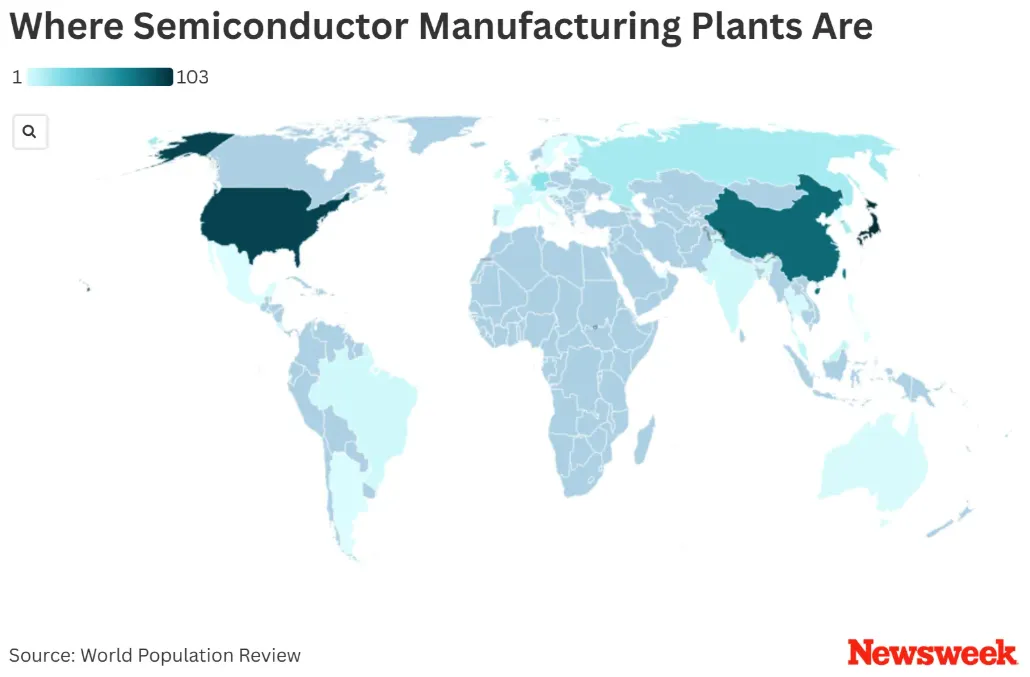
ASML is the world’s sole producer of Extreme Ultraviolet lithography machines — technologies indispensable for fabricating the most advanced microchips — making one Dutch company an unparalleled chokepoint in global semiconductor manufacturing.
TSMC is accelerating a $100 billion investment in Arizona while governments from Japan to Germany compete with subsidies to attract fabrication capacity. The CHIPS Act has already spurred over $630 billion in private investments across 28 US states since 2020.
Regulatory arbitrage will determine winners and losers. Some jurisdictions are treating compute infrastructure as economic development; others are treating it as an environmental problem.
The first-movers — those offering cheap power, streamlined permitting, and sustainable tax frameworks — will attract the infrastructure buildout.
This is industrial policy for the 21st century.
Which jurisdictions subsidise compute infrastructure as economic development? Which ones figure out how to tax it sustainably?
The anti-pattern: what if infrastructure becomes a utility?
There’s a version of this future where AI infrastructure follows electricity, bandwidth, and cloud computing — massive capital investment, intense competition, margins compressing toward utility-like returns. Models commoditise as open-source alternatives keep raising the “good enough” floor. APIs converge until swapping providers is a config change.
The application layer that owns the customer relationship plays infrastructure providers off against each other, just as SaaS companies run on AWS without AWS capturing their margins.
The historical question is timing. Railways, electricity, and telecommunications all followed this pattern — robber-baron economics giving way to regulated utilities — but the transition took decades.
 In the 1920s running five bulbs for a day cost an average person’s weekly wage
Cloud has been compressing margins for fifteen years and AWS still prints money. The question isn’t whether AI infrastructure becomes a utility eventually. It’s whether “eventually” is five years or fifty.
If this thesis is right, value accrues not to generic infrastructure but to the layers where domain context lives — proprietary data, specialised workflows, customer relationships.
The application layer, not the foundation layer could be where the value accrues if supply is commoditised fast. Watch for open-source models reaching “good enough” on core enterprise tasks, API standardisation accelerating, and regulatory pressure toward interoperability.
The contrarian bet
Most investors are focused on the AI capabilities layer. Far fewer are thinking about what replaces “job” as an organising principle. The companies and jurisdictions that solve this will capture value in ways the consensus hasn’t priced in yet.
Employment is more than income. It’s identity, social connection, time structure, status, purpose, and in some less developed countries, access to benefits like healthcare and retirement.

When employment becomes optional for a significant fraction of the population — whether through UBI, capital ownership, or simply because there isn’t enough work to go around — someone has to build the infrastructure for everything else that jobs currently provide.
This is a genuinely underexplored space.
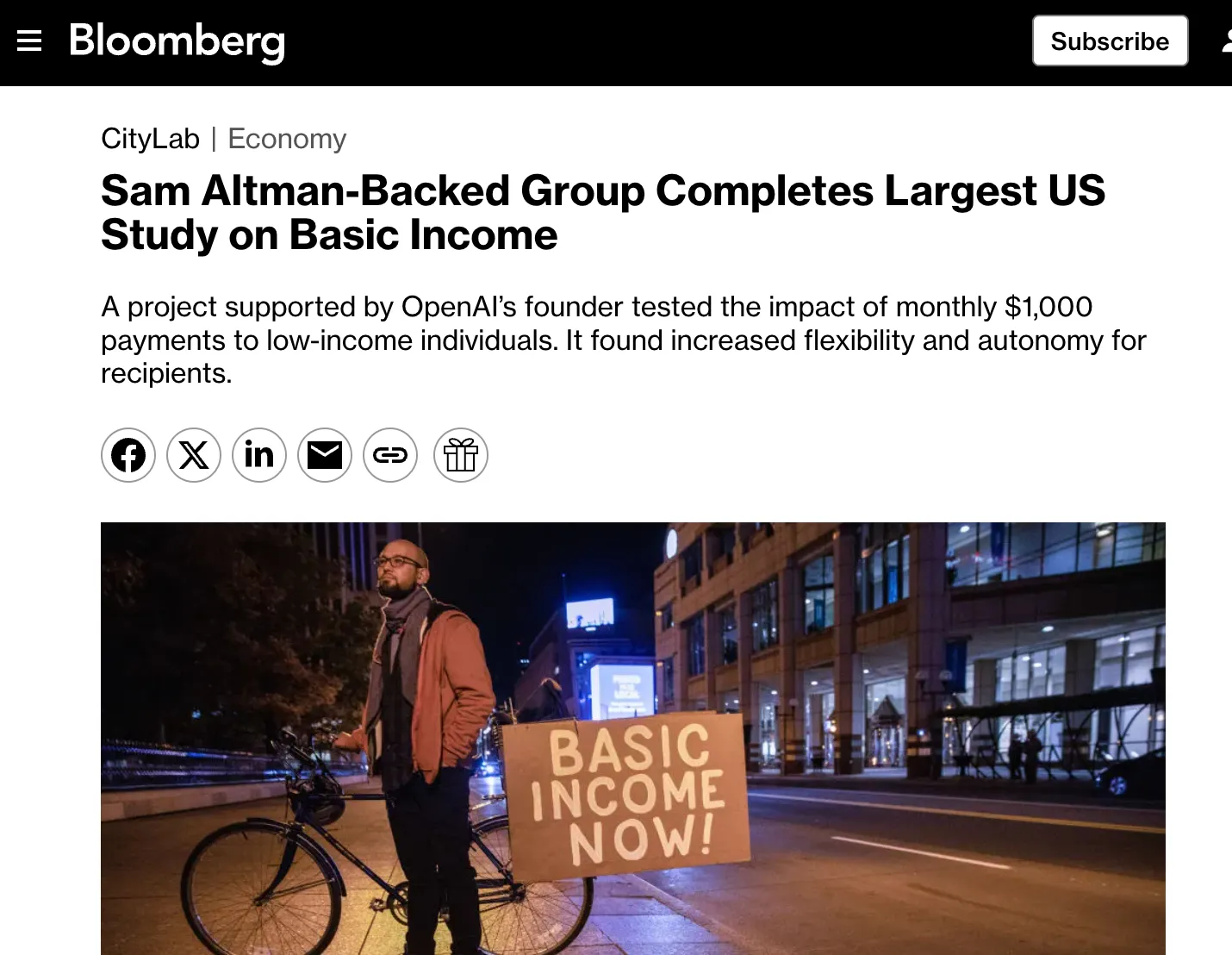
Sam Altman’s OpenResearch programme — perhaps not coincidentally funded by the founder of OpenAI — just released results from the largest US experiment to date.
Consider what we could build:
portable benefits systems that work across multiple employers and gig platforms.
- Credential and reputation systems that aren’t tied to a single company
- Community structures that provide social connection outside the workplace
- Meaning-making institutions for people whose identity doesn’t come from their job title
- Financial products for irregular income streams
Jurisdictions that solve this problem will have a structural advantage in the transition. They’ll attract capital and talent that would otherwise flee instability.
Companies that build the picks-and-shovels for a post-employment economy — the Stripe or Shopify equivalent for life without a traditional job — will capture value in ways the current consensus hasn’t priced.
Watch for companies positioned as infrastructure providers, not infrastructure consumers. Watch for jurisdictions creating favourable conditions for compute buildout. And watch for whoever figures out how society functions when the traditional employment relationship stops being the norm.
Coda
The pendulum is swinging decisively toward capital.
The second bounce is about positioning for where value accumulates when that shift completes.
Next: The tax base crisis
Workers’ declining bargaining power creates a second-order problem for governments: when productive activity moves from taxable wages to electricity bills, the entire fiscal architecture breaks.

In the next post, I’ll explore what happens when governments can’t fund services because their revenue base has evaporated into datacenters — and which jurisdictions will solve this problem first.
Read Part 3: When Governments Can’t Tax Productivity Anymore
