The Second Bounce of the Ball
When productive activity shifts from humans to machines, we relocate where economic value gets created and captured. This triggers a cascade of long term effects on people, capital and infrastructure.
“What hath God wrought?”

On May 24th, 1844, Samuel Morse sent the first long-distance electrical telegraph message from Washington D.C. to Baltimore:
“What hath God wrought?”
The phrase captured the almost miraculous nature of instantaneous long-distance communication as a gift from above. People grasped the first impact immediately: messages that previously took days, now took minutes.
The second impact was slower to notice. Prices snapped into alignment across markets. Newspapers rewired themselves. Entire professions appeared and others vanished.
The telegraph did more than speed things up. It reorganised how society worked and who gained from it. The same pattern is repeating with information automation. Most of the attention goes to the obvious part: tasks replaced, output lifted, margin created or destroyed. That is the first bounce.
When productive work migrates from people to machines, economic value collects in new places. It alters how governments raise revenue, how companies are structured, where capital concentrates, and which parts of the map matter again. These shifts are not priced in.
There is a great book by Tom Standage, the Victorian Internet. In it he describes how the advent of the Telegraph created many of the same phenomena we associate with the internet: it collapsed distance and time, enabled instant global communication, spawned new forms of crime (hacking the telegraph), created online romances, spread misinformation rapidly, produced information overload, and generated both utopian predictions about world peace and dystopian fears about social disruption.

The innovation wasn’t a purely linear phenomenon, making current practices faster or cheaper.
It changed which activities were possible and where power accumulated.
- Market structure - what could be traded, how fast and with whom
- The way organisations were structured
- New professions and companies were created
- The way information was shared, and by who
- The way nations were able to deal internally, and internationally
We’re watching the same pattern unfold with information and decision automation (aka AI), but most people are still watching the first bounce. What once happened to factories is now happening to offices.
Knowledge work is being automated the way calculation work was automated in the 20th century, and production work in the 19th. The consensus trade is obvious: productivity gains, job displacement, efficiency improvements. Maybe these are even overpriced in the short term.
But the ball bounces more than once.
Shift happens - from production, to communication, to coordination
I’ve written previously about how waves of automation; in manufacturing, communications, computing; amount to a fundamental reordering of how society organises itself.
Each shift takes decades to fully unfold, but the pattern is consistent: even though we overestimate change in five years and underestimate it in twenty.
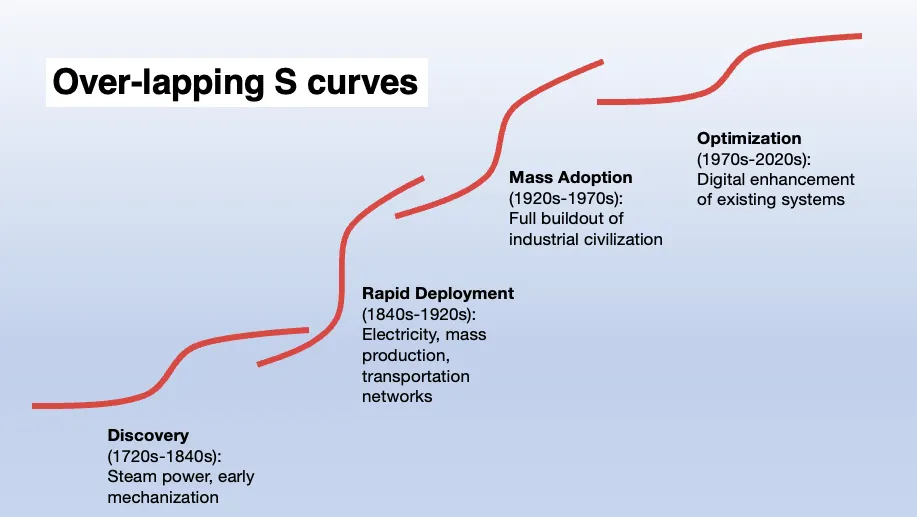
In my last piece, “From Firms to Networks” I argued that coordination layer innovation is coming. For three hundred years, the industrial revolution has been about automating production; steam engines, assembly lines, computers, and now AI following the same fundamental trajectory of delegating human effort into machines.
But the coordination layer; the legal, societal, and cultural infrastructure has remained essentially unchanged, still relying on humans, language, writing, and trust relationships.
That piece covered how we organise when machines do the work: how firms shrink, networks grow, and new hybrid organizational forms emerge. The transaction costs that once made hierarchical companies efficient shift when algorithmic coordination becomes cheaper than human management.
This next series covers where value flows when that reorganisation happens. The structural change doesn’t just shuffle the org chart; it creates profound economic geography and political economy consequences. When the means of coordination changes, everything changes: tax bases, power centers, infrastructure chokepoints, and the fundamental bargain between labour and capital.
When productive activity shifts from humans to machines, we’re relocating where economic value gets created and captured.
This triggers a cascade:
Governments lose their tax base as wages disappear into electricity bills
⇒ economic power concentrates around cheap electrons rather than educated workers
⇒ capital intensity creates moats where labour once had leverage
⇒ entirely new infrastructure layers emerge to manage trust, verification, and coordination in a machine economy.
The annihilation of time and space
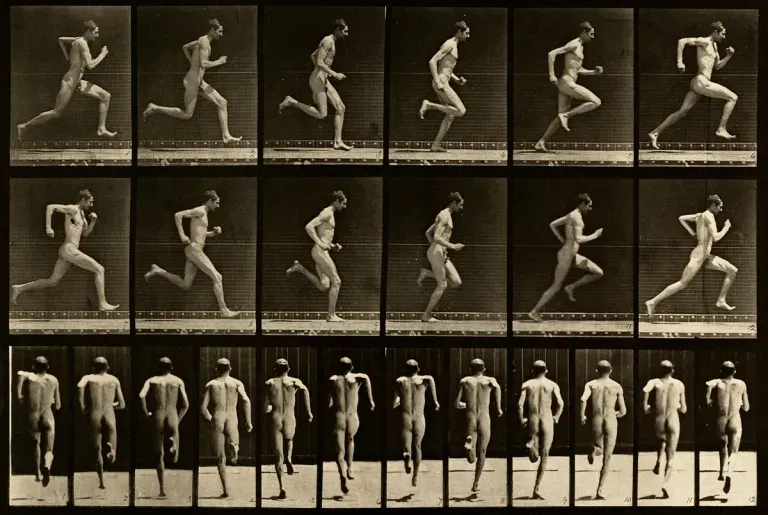
Marx described capitalism as creating the “annihilation of time and space” - the relentless drive to overcome the constraints of distance and delay. Rebecca Solnit extended this insight:
“Annihilating time and space is what most new technologies aspire to do: technology regards the very terms of our bodily existence as burdensome.”
The industrial revolution is a long boom, a multi-century process of abstraction and automation.
We are part of nature, and what we do is part of life’s force to create order where there was none, to organise information in an expanding sphere of influence.
Kevin Kelly calls this the “technium”: the self-organising system of technology that wants certain things, that pushes in certain directions regardless of what any particular human wants.
“This whole grand contraption of interrelated and interdependent pieces forms a single system… large systems of technology of technology often behave like a very primitive organism…
However you define life, its essence does not reside in material forms like DNA, tissue, or flesh, but in the intangible organization of the energy and information contained in those material forms…. Both life and technology seem to be based on the immaterial flows of information.”
The industrial era was a centuries-long process of abstraction: turning human effort into mechanical, electrical, and digital forms. At one end sits single-celled life organising against entropy; at the other, Von Neumann probes dispersing information across the cosmos.
You need not subscribe to transhumanist rhetoric to see that technology has momentum. The “technium” captures this well: a system with tendencies of its own, not fully determined by individual intention.
AI is the latest chapter in this long story of annihilating time and space, of abstracting human capability into machine systems.
Five second-order effects beneath the surface narrative

AI is part of that trajectory. The first-order effects are widely discussed: job automation, productivity gains, competitive shifts.
But next we need to consider not just what we produce, but where production happens, who captures the value, and what infrastructure becomes essential.
The pendulum swings away from Labour, to Capital
When production shifts from human workers to compute clusters, the fundamental balance between labor and capital tips decisively. This is a fundamental change in who captures economic value. Workers lose leverage not because they’re less skilled, but because capital can achieve productivity without them.

The returns flow to whoever owns the infrastructure, and the social and political consequences reshape everything from union power to the basic social contract between citizens and states.
Maybe this will be a painless transition, and maybe it won’t. Isaac Asimov said this, back in the day:
▶ Watch the video in the original post on Substack
The coming crisis of governance (tax and spend)
Modern governments tax wages.
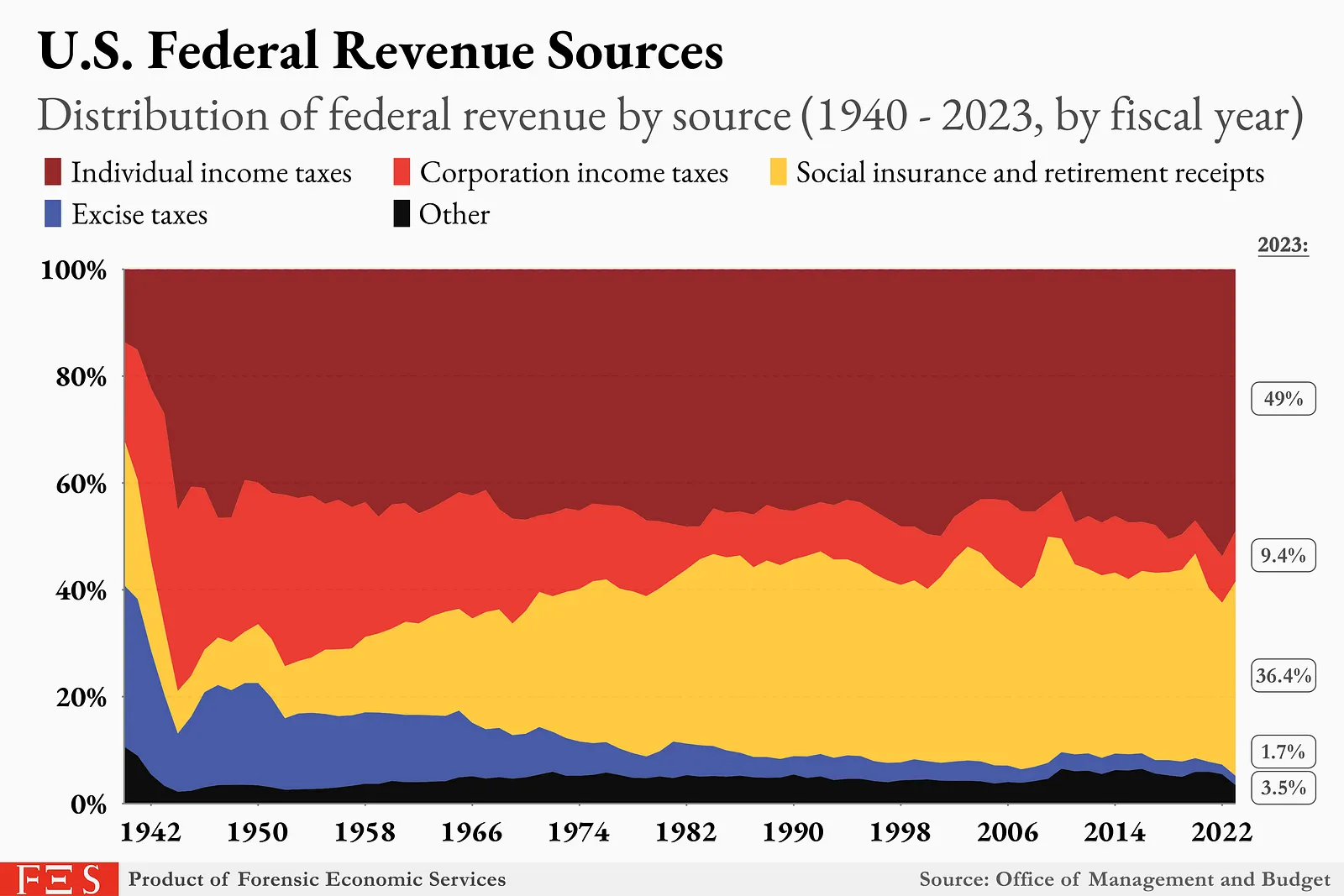
When a company replaces a $100,000 employee with $10,000 of compute and electricity, the tax base evaporates while government obligations remain. Jurisdictions that adapt early through new taxation models will attract infrastructure investment.
Those that don’t face a choice between raising taxes on remaining workers or accepting they can’t fund existing services. Either way, political instability follows.
Even corporation taxes become more challenging when you layer on not just multinational corporations, but also the likely increase in economic activity of non-company economic participants - fully autonomous software that lives internationally is not a taxable entity.
In this scenario how do governments gather resources to participate in the defence and wellbeing of their citizens?
Where are the cheapest electrons?
▶ Watch the video in the original post on Substack
Economic power will concentrate wherever cheap, abundant electricity is available. Unlike the information economy where talent could work from anywhere, AI infrastructure must locate near power sources.
Iceland, Norway, Quebec, parts of the American West, regions with energy surplus become the new economic centers, not because people want to live there, but because that’s where you can run datacenters without breaking the bank.
Oil shaped 20th century geopolitics. Electricity will shape the 21st.
New building blocks of the new economy
The limited liability company was one solution to coordination problems when transaction costs were high. AI and algorithmic coordination collapse those costs, enabling entirely new organisational forms.
Charlie Stross has argued that companies themselves act as “Slow AI”
I’m talking about the very old, very slow AIs we call corporations, of course. What lessons from the history of the company can we draw that tell us about the likely behaviour of the type of artificial intelligence we are all interested in today?
Looking ahead: “Agent as employees” is a skeuomorph, like 19th century innovators putting a tiller on a car. The structures that emerge won’t be companies with AI workers. They’ll be something different entirely.
Think about autonomous entities operating without human management, protocol-based networks replacing traditional companies, ephemeral organisations that form and dissolve around specific outcomes.
I previously wrote about this in From firms to Networks and I’ll expand on it during this series.
Related: From firms to networks: How coordination technology will reorganise everything
After all, maybe we will indeed end up with:
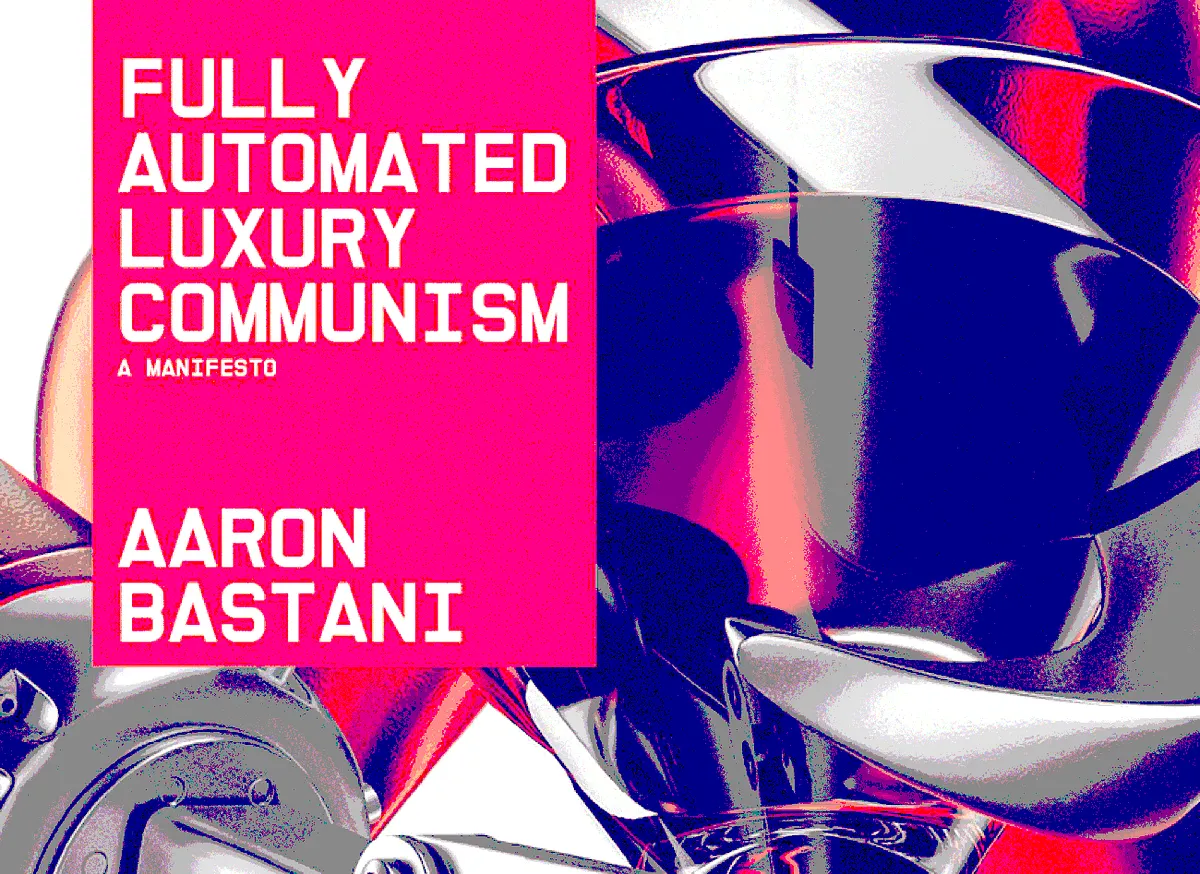
Infrastructure: who makes the picks and shovels
In every gold rush, the people who consistently made money sold the enabling technology - the “picks and shovels”. The prospectors took all the risk.
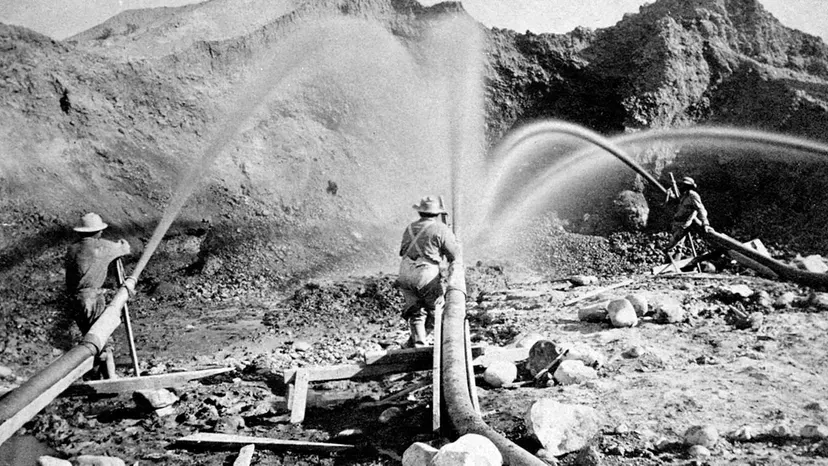
The AI economy creates new infrastructure layers: both physical (datacenters, power generation, cooling systems, semiconductors) and logical (verification systems, reputation networks, governance platforms) that become economic chokepoints.
Infrastructure is where you extract rent. Once established, it’s expensive to replace and sticky to move away from. The returns concentrate not in clever applications, but in the substrate everyone else depends on.
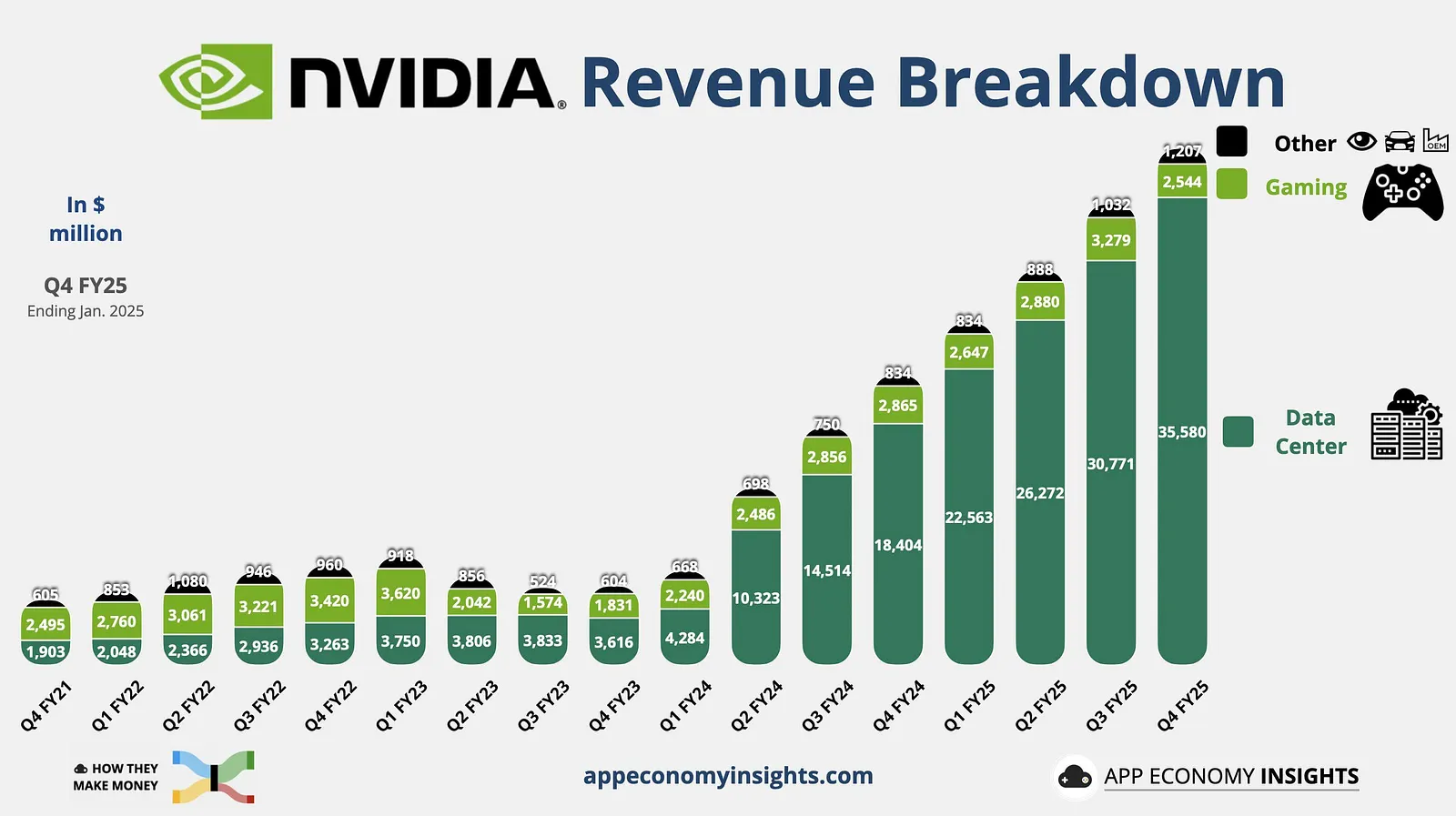
Hence the current white heat of competition in core model development, and the thesis is proved by NVIDIA selling the chips to all comers (see chart) but look beyond that and there are huge opportunities in both physical infrastructure AND the less obvious logical and geographic/political constraints.
The consensus trade gets you consensus returns
The consensus is watching the first bounce: which jobs disappear, which companies build the best models, which applications get traction. All of that is obvious and probably overpriced.
Here is a list of extremely high valuations for very early stage AI companies competing at the model layer
- Humans& (2025) | Raised: $1B* | Valuation: $4B*
- Isara (2025) | Raised: Hundreds of millions* | Valuation: $1B*
- Richard Socher’s Lab (2025) | Raised: $1B* | Valuation: Not disclosed
- General Intuition (2025) | Raised: $133.7M
- Periodic Labs (Sept 2025) | Raised: $300M | Valuation: $1B
- Thinking Machines Lab (Feb 2025) | Raised: $2B | Valuation: $10B
- Inception Labs (July 2024) | Raised: $50M
- Safe Superintelligence (June 2024) | Raised: >$3B | Valuation: $32B
- Reflection AI (March 2024) | Raised: $2.13B | Valuation: $8B
- Poolside (April 2023) | Raised: $626M | Valuation: $3B
Thanks to Elana Gold from Red Beard Ventures for these data
Now I am a big believer in the power of bubbles to drive progress so I am not arguing that this should not happen - but the first-order consequences are obvious. AI automates tasks, some jobs disappear, productivity increases, certain companies win. Everyone sees this.
The analysis is in every deck, every strategy document, every quarterly letter. When everyone sees the same trade, the opportunity gets priced in. You make normal returns at best.
Alpha comes from seeing where next. As an investor, you make money from having a counter-narrative argument AND being right. The AI trade is crowded at the infrastructure (models) and the application layer - everyone’s funding chatbots and copilots and summarisation tools. Far fewer are thinking about where value flows when the underlying structure changes.
Coda
I don’t think we have seen the tip of the iceberg…
▶ Watch the video in the original post on Substack
The second bounce is what matters. Not the immediate automation, but the structural reorganisation that follows.
Over the next five pieces, we follow that second bounce: where it lands, who benefits, and how to position for an economy built on electrons and algorithmic coordination.
